By Lorraine Farina, Hudson Valley Air Quality Coalition (HVAQ) and Rebecca Martin, KingstonCitizens.org
This is part of KingstonCitizens.org’s ongoing series examining the City of Kingston’s Burn Ban legislative process
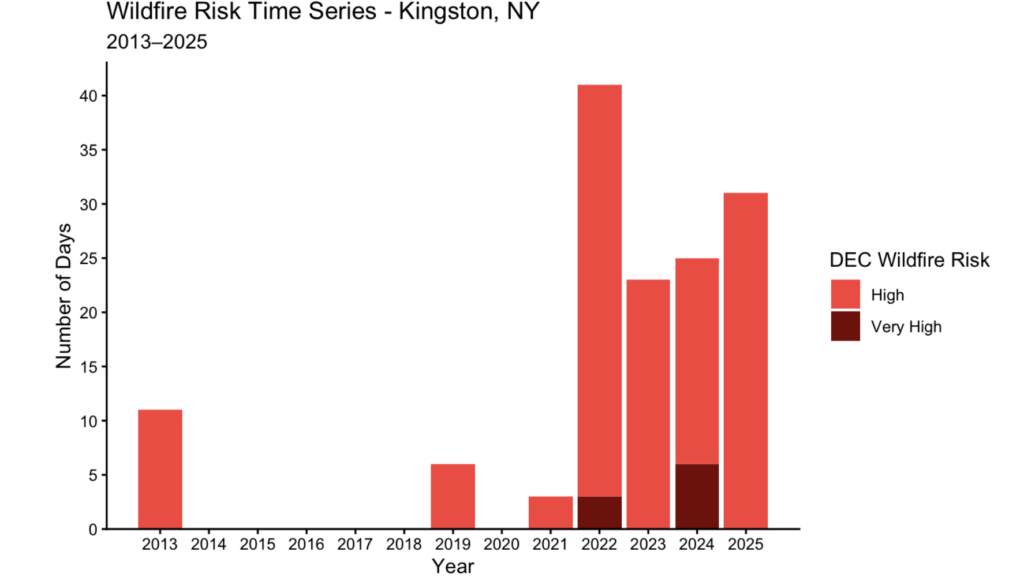
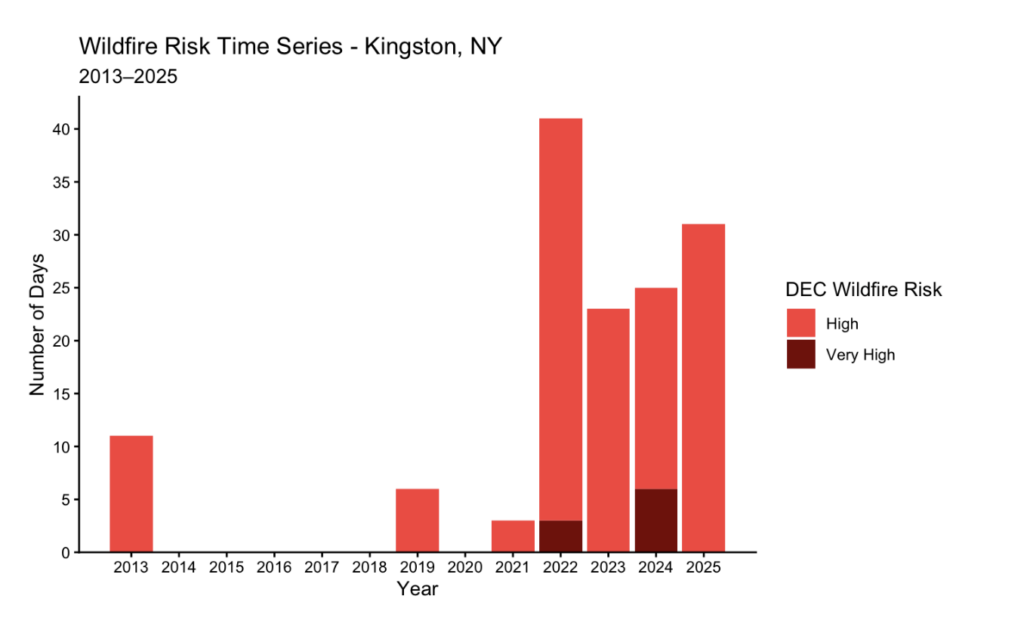
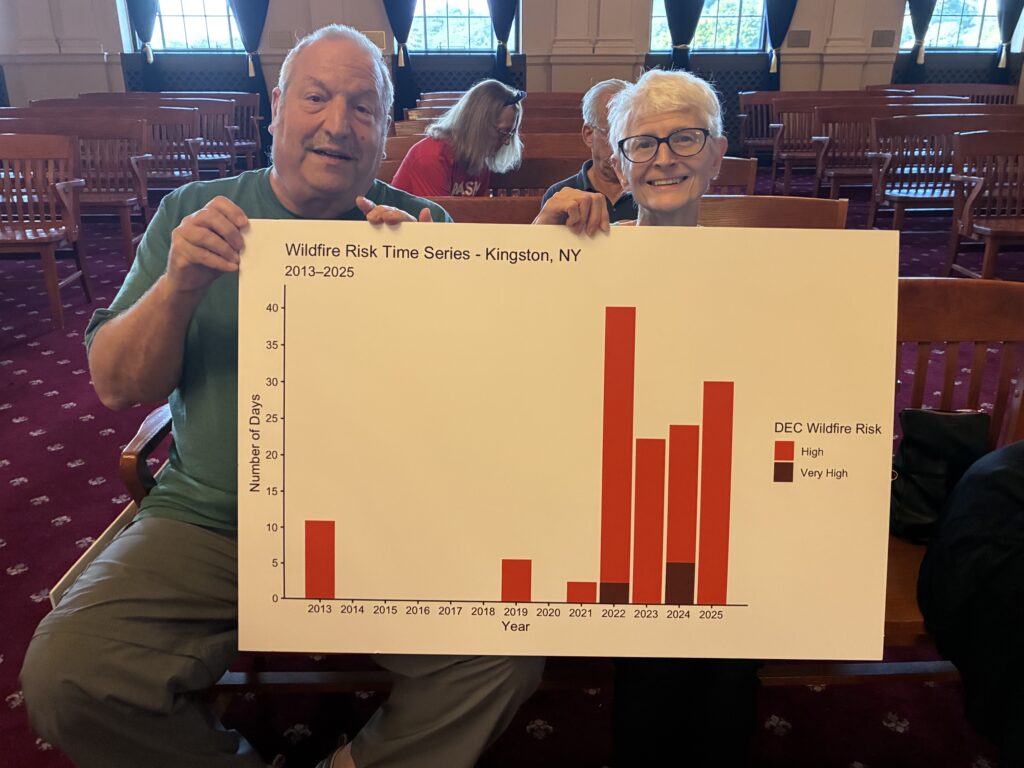
On September 1, the Common Council voted 7–0 to enact a temporary burn ban during periods of high fire danger designated by the New York State Department of Environmental Conservation (NYSDEC). Hudson Valley Air Quality Coalition (HVAQ) has advocated for such a ban since March, 2025. When fire danger is high, eliminating all potential sources of ignition can reduce fire risk.
HVAQ brought Kingston a specific model: in October 2024, the Town of Marbletown issued an executive order declaring a state of emergency and prohibiting all outdoor burning, without exemptions, for the duration of the temporary order.
READ: Ulster county towns declare burn bans after lack of rain in the Daily Freeman (10/24/24)
HVAQ asked Kingston to codify a similar ban for the City. But the legislation that ultimately moved forward was not the proposal HVAQ submitted.
Section 135-10 Temporary Burn Ban During High Fire Danger Periods
We appreciate the Council members who supported the original measure without exemptions, and especially the many community members who have been dedicated to this effort for years, showed up, spoke at the August 26 public hearing, and submitted thoughtful written comments.
The public should understand how the legislation changed, where the process fell short, and how that process should be handled differently in the future.
Transparency and Accountability Are Fundamental to Good Government
The people we elect to office are stewards of the public trust, entrusted with representing the people who elect them. Their priorities and responsibilities should be guided by the needs, concerns, and input of the community. Engaging in local government is critical. Community members should have the information and materials they need to understand what is being proposed, know when and how they can participate, and have a reasonable opportunity to be heard without feeling intimidated, uninformed, or shut out.
During this effort we encountered several problems that made it unnecessarily difficult for community members to follow the legislation and participate in the process.
- Agendas are often posted late and can be difficult to find, requiring community members to search through a long, disorganized list of meetings to determine when an issue will be discussed.
- The August 26 hearing was advertised as being livestreamed and recorded, but neither happened. Fortunately, an attendee made an independent audio recording. Although the recording is imperfect and the accompanying transcript does not accurately reflect the testimony or reliably identify speakers, it provides a record of the hearing that would not have otherwise existed.
- Written public comments were also not consistently included or organized in materials provided to the Council or the public. Some were missing from the August 26 hearing materials, others from the subsequent committee discussion, and none were included in the September 1 Common Council meeting packet.
These details matter because a transparent public process is essential to how legislation is considered and adopted. New York State guidance calls for following established legislative procedures—as a local law has the same status as an act of the State Legislature and its legal procedures should be closely observed. Meaningful public participation also requires timely access to the information and materials needed to understand what is proposed, when it will be discussed, and how it changes. Without that access, community members cannot reasonably follow the legislation or respond to substantive changes—particularly when those changes are introduced on the floor after months of public testimony, discussion and work on the legislation.
The Council Was Prepared to Act Outside the Public Process.
This is where our concern becomes more serious.
At the August 26 public hearing, approximately a dozen community members spoke in support of HVAQ’s original proposal: a temporary ban on all outdoor burning during periods of high fire danger. Not one person spoke against it. Written comments also supported the broader ban.
Yet immediately following the hearing, the Council Public Safety committee narrowed the proposal further by adding an exemption for charcoal grills. The Committee voted 5–0 to move that version forward.
Who asked for this exemption? Based on the materials available to the public, we cannot find anyone who raised these concerns at the hearing or in written comments (see below). The public had spoken overwhelmingly in support of the broader ban, yet the bill was made narrower anyway.
At the August 31 monthly Council caucus—the gathering before the full Common Council meeting where legislation is discussed and members determine how they intend to vote—the Council voted 9–0 to advance the bill with the exemptions included. The result was a less protective bill than the one community members had spent months working to develop and support.
The following evening, immediately before the September 1 full Common Council meeting, we learned that three alderpeople—Ward 9 Alderwoman and Majority Leader Michele Hirsch; Ward 2 Alderman Michael Tierney and Ward 3 Alderwoman, and co-sponsor of the legislation, Marissa Marvelli—had approached the Council President about making substantive amendments to the legislation on the floor. These changes were being proposed without giving community members—including those who had just spoken in support of the bill—an opportunity to review them, ask questions, or respond before the vote.
Had the Council proceeded with the substantive amendments it had prepared to introduce on the floor that evening, without returning them to the public process, the action would have been procedurally improper and subject to legal challenge. The burden would then have fallen on members of the public to take the extraordinary step of bringing an Article 78 proceeding to challenge the Council’s action. KingstonCitizens.org has seen amendments made on the floor happen before over the decades. In our experience, these procedural problems can persist when a Council body does not recognize the flaw in the process—or does not expect community members to take the matter as far as challenging the Council in court.
Going forward, the Council should not attempt to introduce substantive amendments at the final stage of legislation without returning those amendments to the public process. If the Council wants to amend legislation, it should direct its attorney to revise the language, keep the public hearing open, and take up the revised legislation at a subsequent meeting. That gives the public an opportunity to review the proposed language, understand what had changed, and respond before the Council votes. The public should not have to challenge a law in court after the fact to obtain the process it should have received before the vote. 1 2 3
Furthermore, the public deserves to know what prompted the proposed changes that evening and who requested them. What information led the three alderpeople to seek further amendments that had not been brought into the public discussion? And what led them to move forward with changes after a year and a half of testimony and public input addressing the science, public safety, and public health concerns at stake?
In the end, the floor amendments were abandoned. But this episode makes clear why we think it is time for Kingston Council members to receive annual training in local legislative procedures and public process. That is in the public interest and can help prevent political maneuvering from taking precedence over a transparent, orderly legislative process and meaningful public participation.
The public did its part
Community members participated in the local legislative process—the very civic engagement we are encouraged to engage in and that makes representative government work. When people take the time to participate, the public deserves to see how input was considered and why legislation is changed. That is part of the public trust.
At a time when public confidence in government is under strain, we need elected officials to take seriously their role as stewards of systems that serve the public and who are accountable for making those systems clear and accessible.
HVAQ is calling for meaningful improvements to the City’s legislative process, including a clear, visible roadmap for the public to follow when proposing legislation, tracking its progress, and understanding how and why changes are made, every step of the way.
We Will Keep Working to Strengthen the Law
Kingston has taken an important step toward protecting our city from a potentially catastrophic wildfire. We recognize the Council members who supported it, but especially the community members who have been dedicated to this effort for years and who have done the hard work of showing up, speaking out, submitting comments, and pushing for stronger protections.
We will continue to work to strengthen this law—and to make sure the public process that shapes it is worthy of the people who take the time to participate.
- Adopting Local Laws in New York State (DOS)
- NY CLS Mun H R _ 20
- NYSAC Training for County Officials: adopting-local-laws
PUBLIC RECORD: Public comments and hearing testimony
Written Comments
- Written Comments (Part 1)
- Written Comments (Part 2)
- Written Comments (omitted from the comment package)
- Linda McLuckie, Ward 3: I support a temporary burn ban on ALL outdoor burning in Kingston during times of HIGH fire danger as designated by the DEC. It’s imperative with how close houses are in Kingston. We could lose entire communities. This is really a no brainer and must be supported. I’m shocked this is not already in place.
August 26, 2026 Public Hearing
Amy Loewenhaar-Blauweiss, Ward 5
Shared personal testimony about a home fire in which mutual aid departments were unable to arrive in time. She advocated for no exclusions to the bill, a temporary ban on all outdoor burning whenever DEC designates Kingston as being in high fire danger, and the development of an emergency evacuation plan. She emphasized that only a complete ban on outdoor burning during these periods would adequately protect people, property, and the city.
Dr. Paula Kagen, Ward 3
Shared intimate testimony about experiencing the 1994 Chicago fire and supported a temporary ban on all outdoor burning during periods of high fire danger.
Lorraine Farina, Ward 9 and Director of Hudson Valley Air Quality Coalition
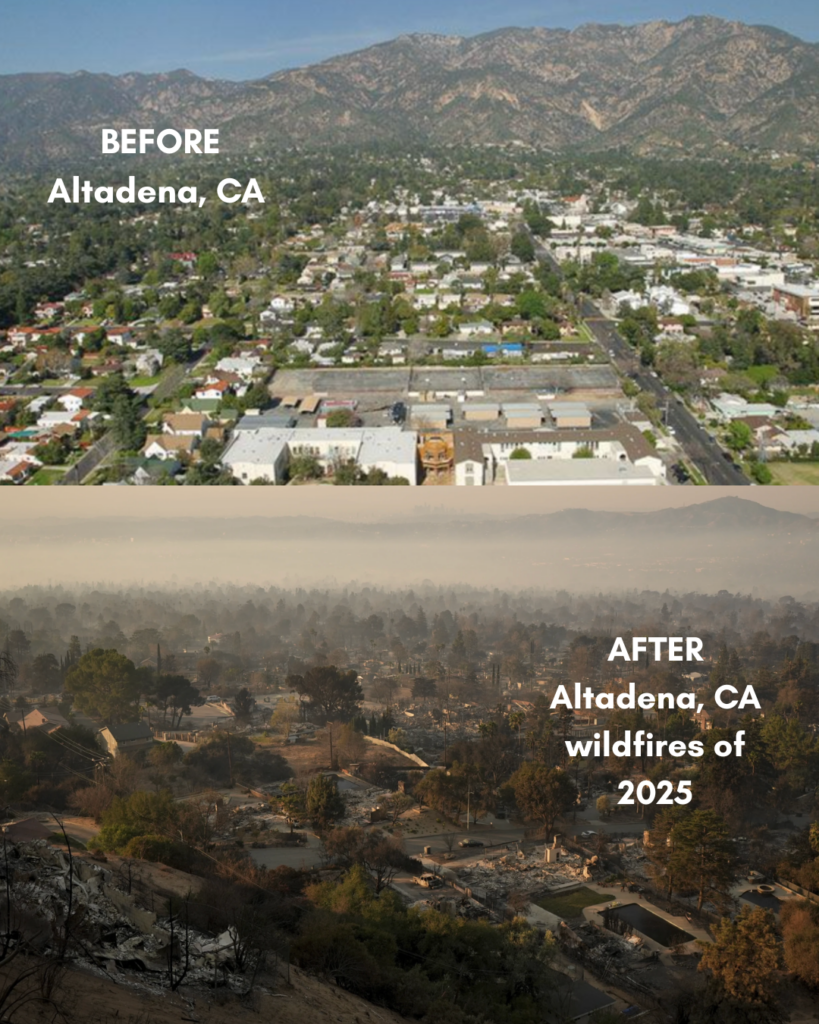
Said that concerns about the Fire Department’s (FD) ability to enforce a temporary burn ban overlook the far greater challenge of responding to a wildfire in a densely developed urban area. Pointed to surrounding Ulster County communities that enforced their own bans in 2024 and argued that relying on traditional assumptions about rapid fire response does not account for current wildfire conditions. Since HVAQ first raised this concern and began advocating for this proposed temporary burn ban, community after community in the US either threatened by or destroyed by fires that are now characterized as “wildland urban fires” (WUI): settled towns whose homes and structures are at risk due to the same worsening climate factors and parameters that the DEC uses to calculate its fire risk data here in Kingston and inform its daily fire danger map.The latest research into WUI fires shows that urban FDs are equipped to fight discrete, individual fire events, not large, rapidly-spreading fires that are fueled by actual structures and homes. Warned that a wind-driven wildfire could quickly overwhelm the department, as demonstrated by recent fires in California.
Robert Fanshel, Ward 9
Called for a total, temporary ban on all outdoor burning whenever DEC designates Kingston as being in high fire danger, with no exclusions. Pointed to the recent devastating fires in Spokane, Reno, Nevada and Utah: all affected settled towns and structures, and overwhelmed municipal fire departments. Emphasized that any combustion creates risk and that a single spark could lead to disaster.
Lynn Johnson, Ward 5
Supported a temporary burn ban on all outdoor burning, with no exemptions: “The best fire is the one that doesn’t happen.”
Judy Lewis Mernit, Ward 9
Shared personal testimony about experiencing wildfires in California and emphasized how quickly a fire can spread from a single spark, including from a charcoal grill. During periods of high fire danger and strong winds, even well-equipped fire departments may have limited ability to stop a fire from spreading. Warned that hotter temperatures and stronger winds are increasing the risk and argued that preventing fires before they start is a simple, reasonable step.
Billy Mernit, Ward 9
Acknowledged the resistance to a temporary ban but argued that asking people to refrain from outdoor burning for a very limited number of high-fire-danger days is a small sacrifice. Pointed to the recent experience of poor air quality from wildfires in Canada as an example of how fires far beyond our own backyards can affect the entire community. Said that having a law on the books gives people a stronger basis for asking neighbors to refrain from burning during dangerous conditions and makes them more likely to listen.
Tanya Garment, Ward 9
Stated that a complete burn ban is simpler and easier for people to understand and that exemptions create confusion. Emphasized that Kingston is densely populated, with homes and properties in close proximity. Raised concerns about Hutton Brickyards’ political influence and cited past experiences involving the Empire State Trail, building codes, and permits. Also expressed concern about open fires and flames at a property used by visitors who may not be connected to the local community. Called for a clear, simple, and strong law.
Christopher Drobny, Ward 3
Supported a temporary ban on all outdoor burning whenever the NYSDEC designates Kingston as being in high fire danger. He argued that the ban should have no exclusions and that a complete prohibition on outdoor burning during those periods is necessary to protect people, property, and the city.
Charlotte Adamis, Ward 3
Attended the public hearing with an open mind and, after hearing the testimony, concluded that a burn ban without exemptions was clearly called for.
Leah Wesselman, Ward 9
Supported the temporary burn ban ordinance without exemptions. Raised concerns about Kingston’s approximately 150 short-term rentals, noting that many landlords do not live locally and that visitors may be unfamiliar with the city’s laws, rules, and ordinances. Described seeing outdoor fires with large embers flying into the air, which was alarming. Asked how information about the temporary ban will be communicated when it takes effect, particularly to short-term rental owners and visitors.