By Rebecca Martin
When we first wrote about the need for a temporary moratorium on new Battery Energy Storage System (BESS) applications in Kingston, the goal was to give the City time to understand this emerging technology and get our zoning right before a project arrives.
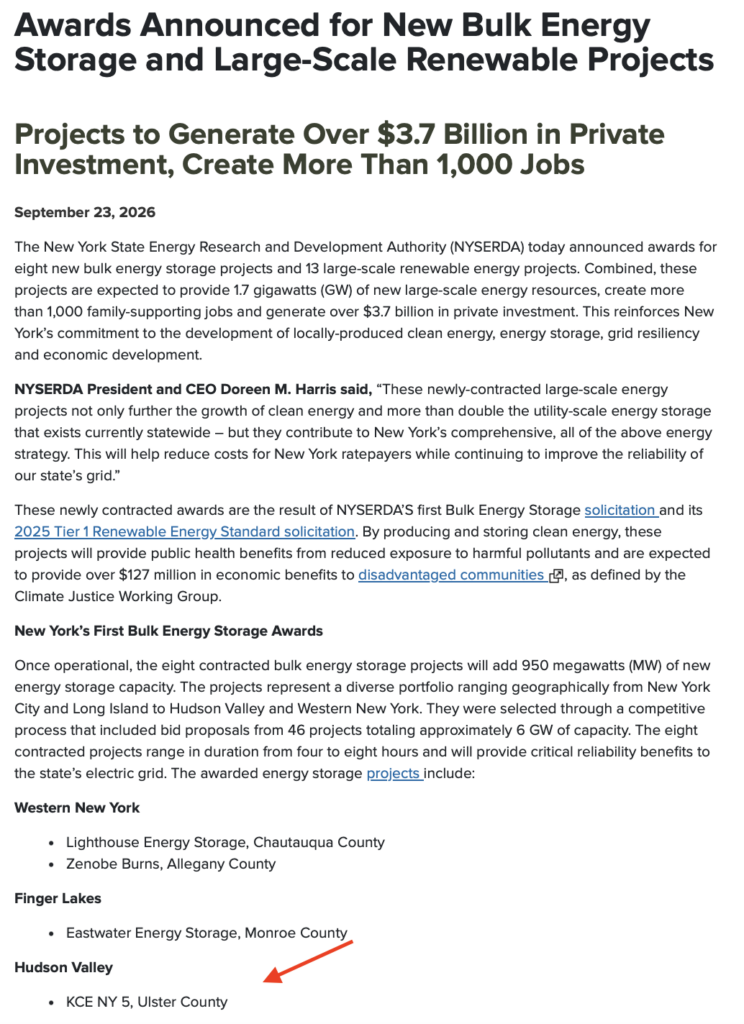
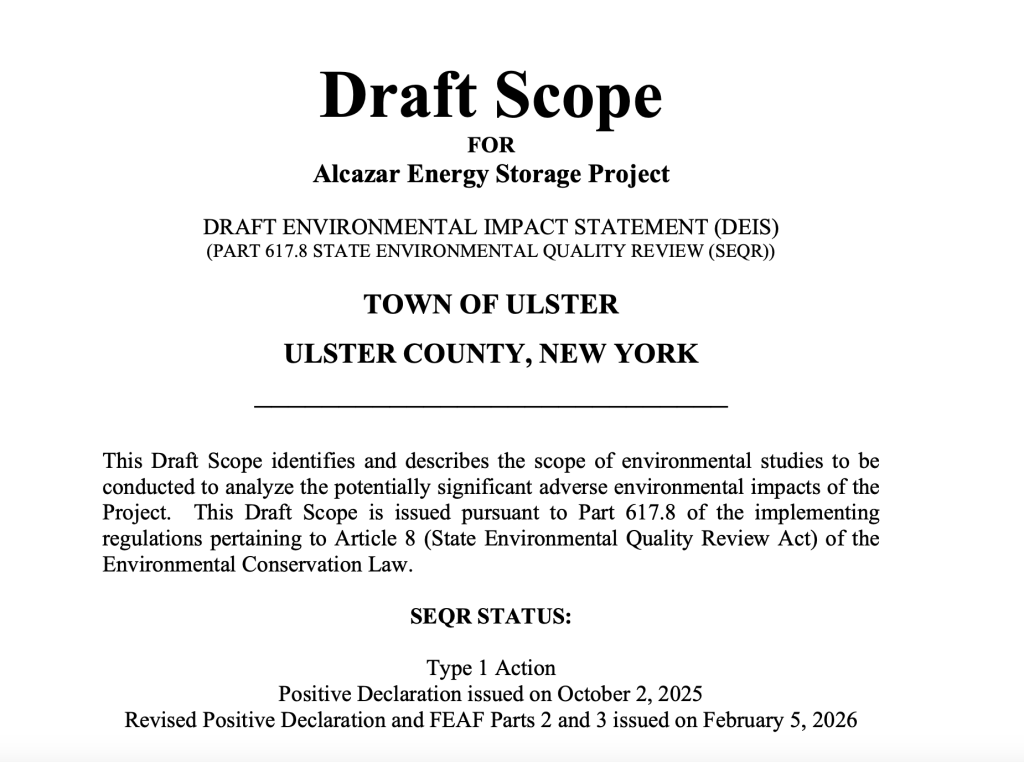
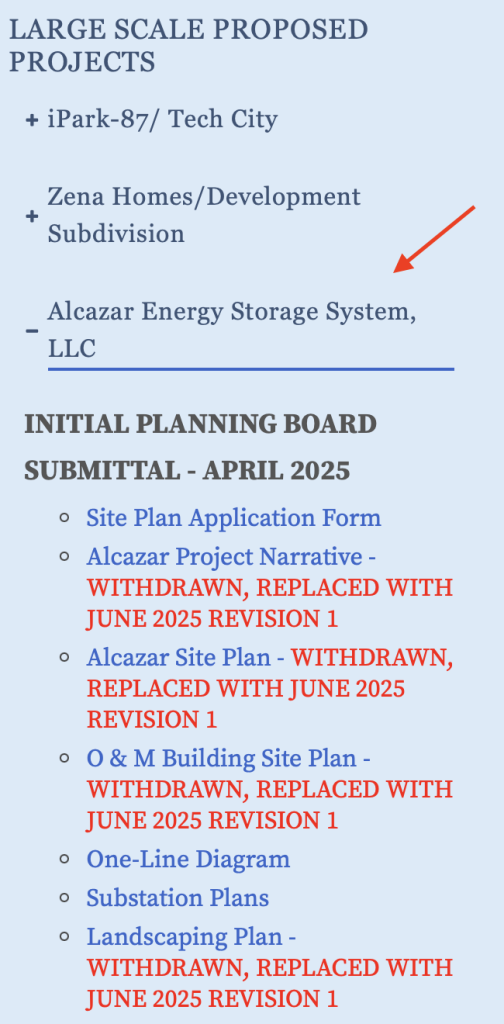
That need has become clearer given what we are now seeing in the neighboring Town of Ulster, where now three very large BESS projects are being proposed in close proximity to Kingston. Imagine being a small town board suddenly having to manage three major environmental review processes under an outdated zoning code that doesn’t account for large-scale battery storage. That means making consequential decisions while still trying to understand the technology, the risks, and what the community needs. Kingston has an opportunity to avoid that predicament by taking the time to establish the right framework before a project arrives.
The City’s Zoning Working Group, following the recommendation of the Climate Smart Kingston Committee, has advised the Common Council to amend Kingston’s zoning code to address BESS. Notably, a member of the Working Group questioned whether the Common Council itself has the expertise needed to craft a BESS ordinance. That concern should not be dismissed. Getting this right will require the City to first identify the critical questions that must be answered, engage the appropriate independent experts, and develop a thoughtful, well-informed path forward. That takes time.
Why does this matter?
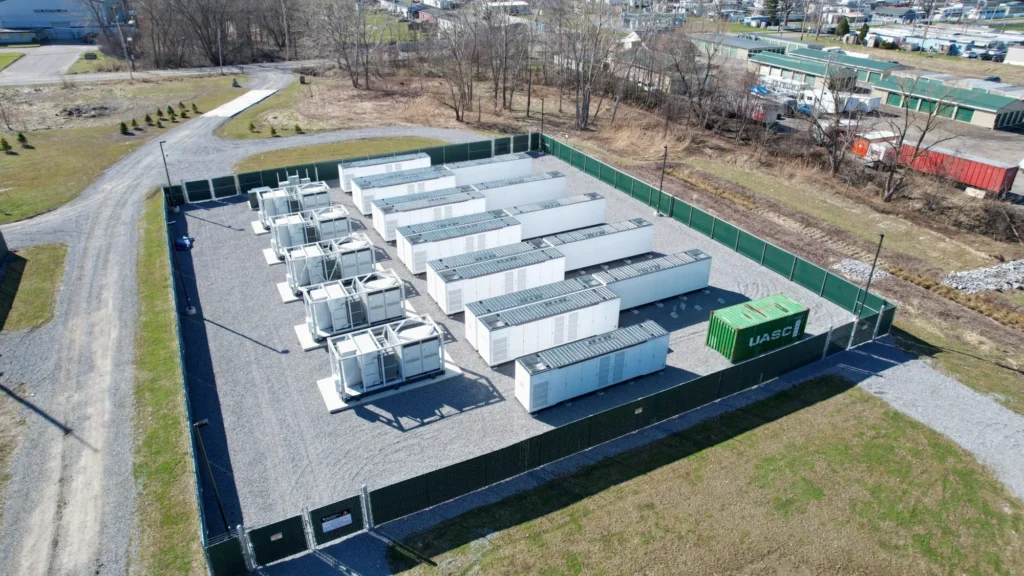
Battery storage is an important part of the clean-energy transition. The question isn’t whether Kingston should support energy storage. The question is how—and where—we should allow battery facilities to be built.
Lithium-ion battery storage presents safety considerations that are different from many other types of development. Batteries can experience thermal runaway, which can produce intense fires, release flammable gases, and, under certain conditions, create explosion or deflagration hazards. Fire-safety standards for BESS address fire propagation, separation distances, ventilation, testing, and emergency response—and those standards continue to evolve.
That matters when we’re talking about facilities in or near densely populated areas. Kingston needs to understand what those standards mean for our geography: setbacks from homes and businesses, emergency access, water resources, firefighting capacity, emergency-response plans, and the potential cumulative impacts of multiple facilities in the region.
A Familiar Problem: When Developers Define the Zoning
Although the circumstances aren’t exactly the same, there is a useful lesson in what happened in the Town of Ulster in 2018. When GlidePath proposed its Lincoln Park Grid Support Center, the developers argued that a large power-generating facility could be treated as a “utility company structure” under the Town’s existing zoning.
The zoning code did not clearly define what that term meant or distinguish conventional utility infrastructure from a privately developed power plant. That ambiguity became a major point of contention and ultimately prompted the Town to revisit its zoning—but only after the community narrowly avoided a serious mistake, thanks to the sustained and determined work of local advocates who fought to stop the polluting project.
A Moratorium Is About Time—and Public Process
If a BESS project is submitted before Kingston amends its zoning, the developer will be judged under the zoning in effect when the application is filed. Kingston could then find itself debating how to regulate a complex project after it arrives, rather than establishing the rules in advance.
A temporary moratorium of at least six months would give the Common Council time to understand Kingston’s particular assets and vulnerabilities, consult qualified experts, and establish a thoughtful regulatory framework that could be ready in the new year.
We tried to move that conversation forward and shared a draft proposal, along with concerns behind it, with several Council members, including Sara Pasti, Michele Hirsch, and Marissa Marvelli.
But the proposal never entered the public process. Our request was not placed on a committee agenda, so the public never had the opportunity to explain the proposal, answer questions, or hear Council members publicly consider and debate it.
That is where gatekeeping becomes a problem. The public owns this civic space, and committees should provide a meaningful place for residents to bring forward ideas and engage their elected representatives. If an issue cannot reach a committee, where is the public supposed to have that conversation? Three minutes of public comment at a Council meeting is not a substitute for meaningful public deliberation.
Council members may ultimately decide that a moratorium is not the right approach. That is democracy. But the public should at least have the opportunity to make the case.
When One Door Closes…
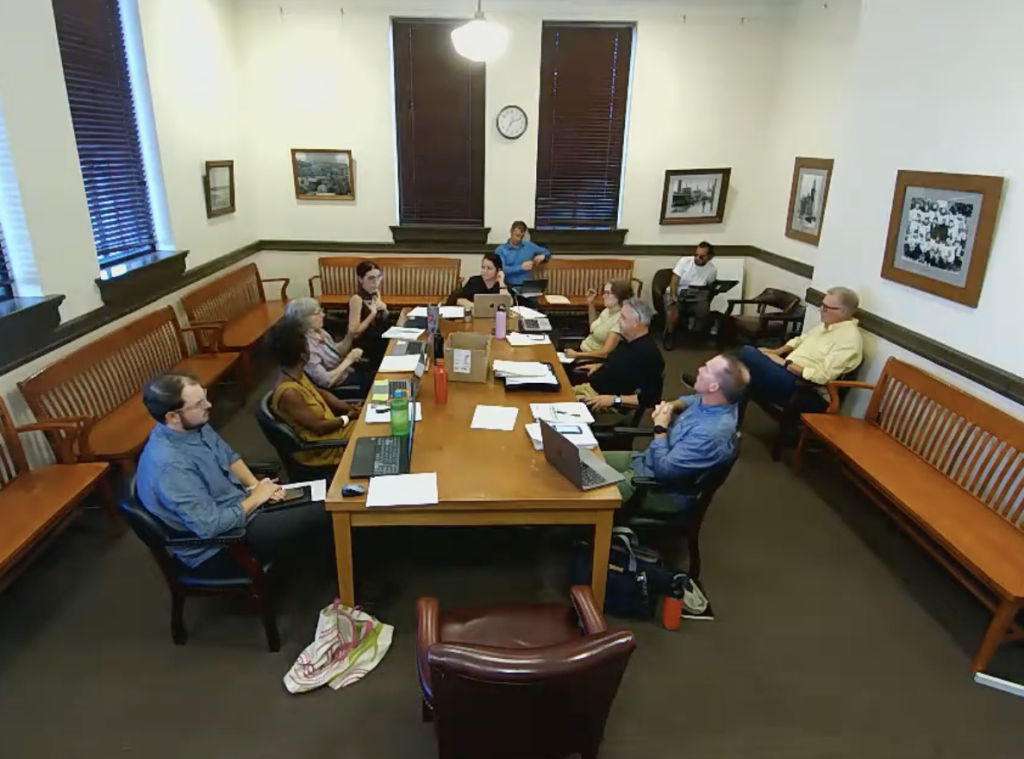
Although the Council process did not provide a path forward, we looked for another avenue. Because the Conservation Advisory Council (CAC) advises the Common Council, we brought the conversation there. In advance of the CAC’s recent meeting, we spent hours speaking with members about why Kingston should thoughtfully consider how its zoning accommodates BESS before an application arrives.
Unfortunately, when the possibility of a moratorium was raised, the Council members we engaged were not able to bring our concerns forward in a meaningful way. We were not asked to attend the meeting to explain the proposal or respond to questions directly.
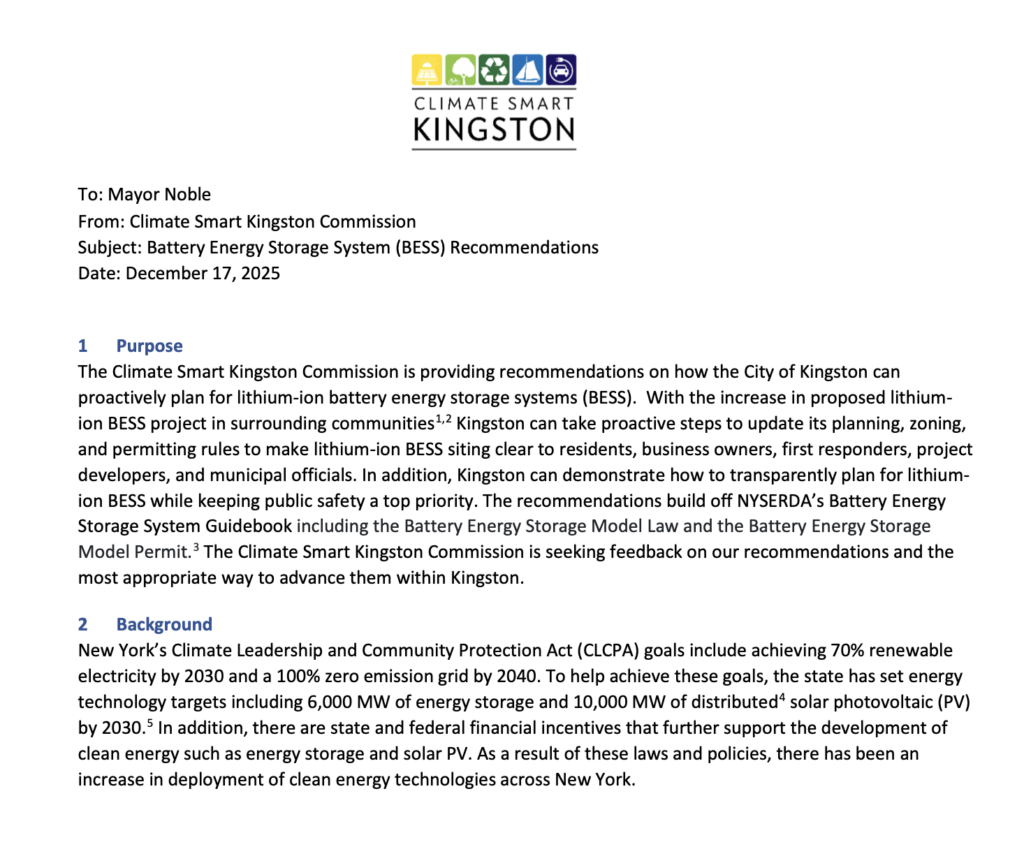
Questions were also raised about the rationale for a moratorium, including comparisons with the Kingston Climate Smart Committee’s position. But different advisory bodies have different roles and areas of expertise. The Climate Smart Committee’s work on clean-energy policy does not necessarily address the specific zoning, land-use, infrastructure, and public-safety questions Kingston must consider when developing rules for BESS. Those questions deserve to be evaluated on their merits and with the appropriate expertise.
The CAC was also told by its administrator, Julie Noble, that the Executive Administration would veto any BESS moratorium. While she may have insight into the administration’s position, a potential veto should not substitute for the Council’s own consideration of the issue or the public’s opportunity to make its case. Before deciding whether a moratorium is appropriate, Kingston should have the opportunity to fully consider the questions, hear from residents, and understand what it needs to know.
A Moratorium Gives Kingston Time to Do the Work
A temporary moratorium is a legitimate planning tool—one that a handful of municipalities right here in Ulster County have used to give themselves time to understand BESS and establish local rules.
The Laws & Rules Committee discussed creating a task force within the next 30—and potentially 60—days to examine BESS rather than pursuing a moratorium.
But they miss the point of a temporary moratorium. A moratorium doesn’t replace the work of a task force—it gives the City time to do that work without a BESS project arriving while the rules are still being sorted out.
A project could be submitted tomorrow, next week, or while the task force is getting organized. A temporary moratorium would give Kingston the time to establish the task force, bring in qualified experts, review its zoning, and develop protective standards without interruption.
That’s good planning.
Take Action
Call your Kingston Common Council member. Ask them to pause BESS applications by supporting a temporary moratorium of at least six months so the City can review its zoning, bring in qualified experts, and develop thoughtful, protective regulations before a project arrives.