
By Rebecca Martin
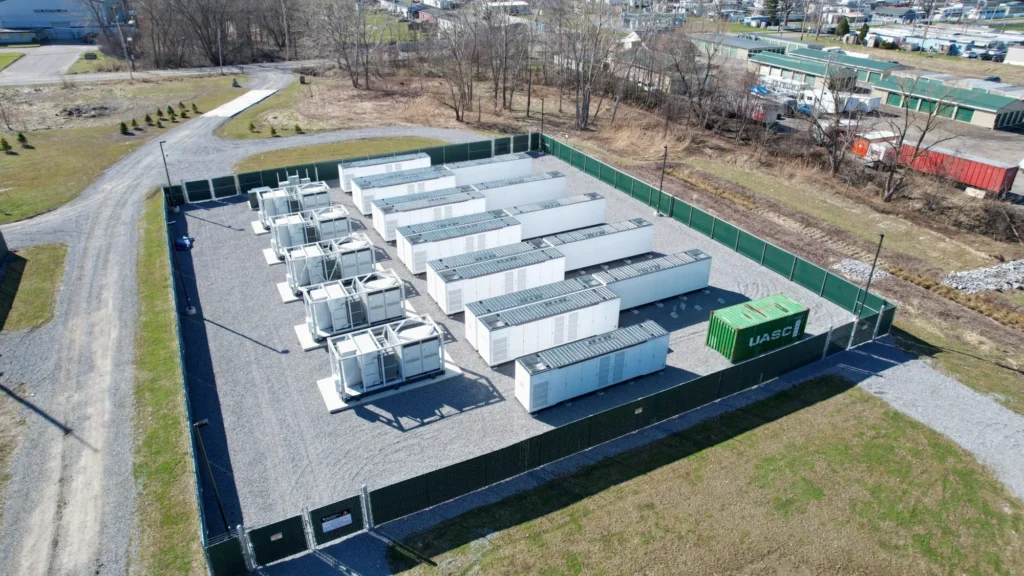
Battery Energy Storage Systems (BESS) are becoming an increasingly important part of New York’s clean energy transition. As these facilities are proposed throughout the state, communities are being asked to make decisions involving complex issues related to zoning, land use, public safety, emergency response, environmental impacts, and long-term planning.
Kingston has not yet received a BESS proposal. That gives us an opportunity to prepare before a project arrives.
We have drafted a temporary moratorium on new BESS applications for consideration by the Kingston Common Council.
This is not a ban on battery storage. It is a planning tool that gives Kingston time to understand this emerging technology, engage the public, seek appropriate expertise, and develop regulations that are thoughtful, legally sound, and protective of the community.
It also allows the City to develop a strategy for engaging with BESS projects outside Kingston’s boundaries. While home rule limits the City’s ability to regulate neighboring municipalities, Kingston can establish how it will participate when regional projects may affect our community members, emergency response systems, infrastructure, or the environment.
At the recommendation of Climate Smart Kingston, the City’s Zoning Working Group is asking the Common Council to review local laws and determine what changes may be needed to address BESS. Kingston’s current regulations were not written with utility-scale battery storage in mind. Updating them requires careful consideration.
Battery storage is a rapidly evolving technology. While Kingston has talented staff, the Common Council should not feel obligated to rely only on existing resources when specialized expertise is needed.
Many municipalities are consulting fire safety specialists, engineers, planners, environmental professionals, and attorneys with BESS experience. We should do the same. Outside expertise can help ensure Kingston’s policies are technically informed and protective of our community.
The State’s model language and guidance are useful starting points, but they are not a substitute for local planning. Kingston has unique neighborhoods, infrastructure, environmental resources, and public safety considerations that deserve careful evaluation, and the Kingston Common Council should take the time that is needed to create an approach that supports clean energy goals while ensuring projects are designed to protect the community.
Without a pause, a developer could submit a proposal before Kingston has completed its review or updated its laws. Once a project enters the approval process and SEQR begins, the City’s ability to use a moratorium or establish new standards specifically to address that pending project is no longer available.
The result could be years of conflict over a specific proposal before Kingston has first decided what standards should guide these decisions. Instead of creating a thoughtful framework in advance, the City could find itself responding to a project under existing rules that were never designed for this technology.
Communities like the Town of Ulster are already navigating three different BESS proposals and the complex questions that come with them. Kingston has an opportunity to learn from those experiences and prepare before facing the same challenges.
Take Action
With the Zoning Working Group’s incoming recommendation to review Kingston’s zoning code and local laws for BESS projects, the Common Council should consider a 6–12 month moratorium as a reasonable and responsible step while the City develops a thoughtful strategy. This time would allow the Council to engage the public, determine what expertise is needed, seek outside professional assistance where appropriate, review zoning, safety, and emergency response considerations, develop protective standards, and establish a process for regional engagement.
The goal is not to stop battery storage – it is to ensure that if projects move forward, they do so with careful planning, strong protections, and community confidence.
The city of Kingston is already affected by the Terra-Gen proposed 250mw BESS and now a 2nd 120mw 500 ft down the road. There are 2 city of Kingston schools and numerous residents who live in the danger zone. There has been no comment nor concern expressed by the Mayor or the Common Council. Why not?
Sara Pasti is taking the moratorium seriously, and she could likely use support. Folks living outside of that ward in Kingston can also ask that their council member to engage on this and support it, as a protective measure for the city to be proactive rather than reactive. Thanks, Betty!