
 kingstonnavigator
Food & Water Watch Testifies at Kingston Common Council Meeting
 Alex Beauchamp is the Northeast Region Director at Food & Water Watch. Based in the Brooklyn office, Alex oversees all organizing efforts in New York and the Northeast. Alex has worked on issues related to fracking, factory farms, genetic engineering, and water privatization at Food & Water Watch since 2009. His background is in legislative campaigning, and community and electoral organizing. Before joining Food & Water Watch, Alex worked for Grassroots Campaigns, Inc., where he worked on several campaigns including organizing support for renewable energy in Colorado, fundraising, and running get-out-the-vote operations. Alex graduated from Carleton College with a degree in political science. He can be reached at abeauchamp(at)fwwatch(org).
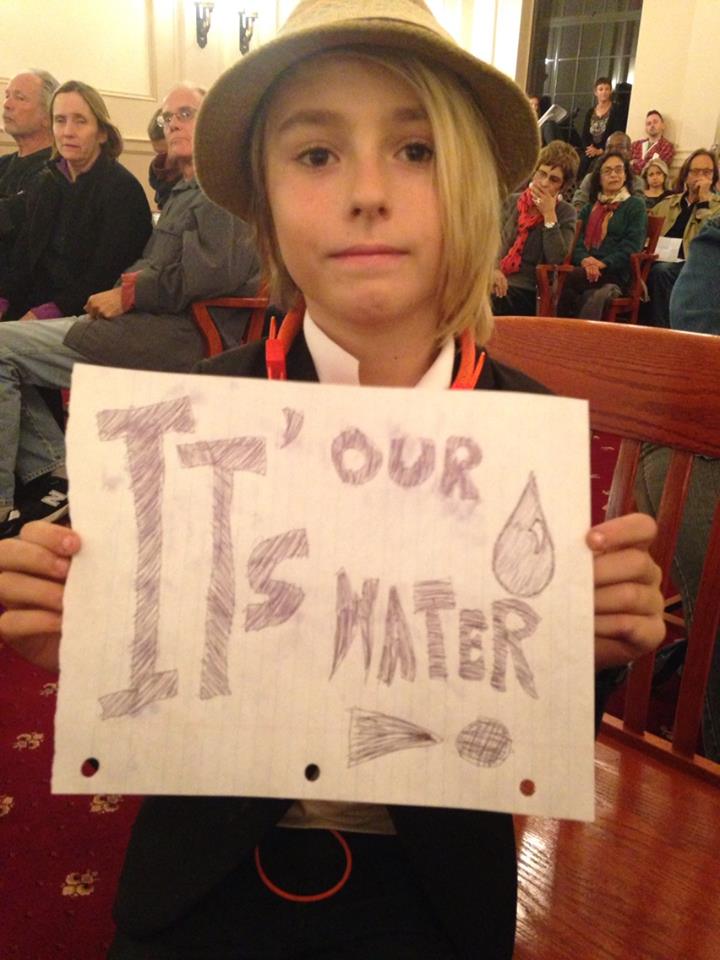
It’s Our Water: Good Work! Standing Room Only at the Kingston Common Council Meeting 10/7/14
By Rebecca Martin
Great work, everyone. Thanks for showing up and testifying this evening. Your support made the start to this campaign a successful one.
Special thanks to Kingston’s Common Council, who really were as surprised as all of us regarding the proposed water sale to Niagara Bottling Company. A big thanks to Alex Beauchamp of Food and Water Watch. It’s great to have your support. Wasn’t it fantastic to have the jazz musicians Jack DeJohnette and Larry Grenadier with us this evening? Did you guys catch that?
Thanks to Clark Richters of Kingston News for capturing the entire evening. Video of tonight’s meeting will be available shortly.
Our next steps over the next two weeks are two upcoming meetings where we ask residents to be present to witness. Public comment may or may not occur – but our presence will say plenty. They are:
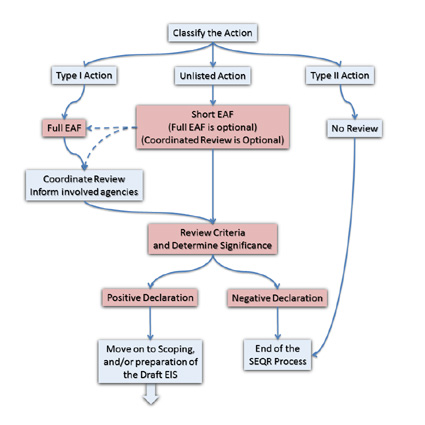
DEP and the Ashokan Reservoir? More on SEQR and Agencies Involved.
By Rebecca Martin
Today, a press release was printed in the Daily Freeman that was written by the Water Department Superintendent Judy Hansen.
In it, the Ashokan Reservoir is noted as part of Kingston’s emergency water planning. I’ve bolded this text in the body of the press release below that states:
“The availability of back-up supplies like NYC’s Ashokan Reservoir is also part of our emergency planning. Kingston has the right to obtain water from the Ashokan Reservoir and was poised to access this supply in both 1957 and 1981.”
If I am reading this correctly, it appears that the DEP (Department of Environmental Protection) would also be an agency listed, if the action in the EAF had included Kingston and its water source (which it should have).
City of Kingston’s Water and SEQR.
By Rebecca Martin
I’d like to turn your attention for a moment to a critical aspect of the current SEQR process for the Niagara Bottling Company where the Town of Ulster Town Board is lead agent.
Have a look at page 1 in ‘Full Environmental Assessment Form’ (EAF) submitted to SEQR. In the ‘Brief Description of Proposed Action‘ where it says:
“The applicant (Enterprise Properties LLC) is proposing the construction of a water bottling facility on a 57.50 acre parcel of land at the end of Boices Lane. In addition, the project will involve the extension of municipal water and sanitary sewer services to the project site as well as natural gas and electric utilities….” etc.
Why is this significant?
Kingston’s Water Supply. A Pop Quiz.
By Rebecca Martin
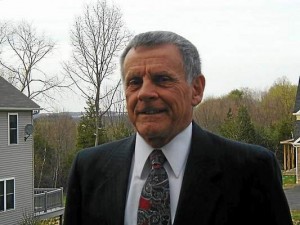
Click on former Ward 3 Alderman Charlie Landi’s photo to read the recent article in the Daily Freeman. It has inspired a pop quiz. Lets see how much we know about Kingston’s water supply.
The Questions.
- What is Cooper Lake’s current ‘safe or dependable’ yield?
- What is the current ‘safe or dependable yield’ number based on?
- How many millions of GPD (gallons per day) does the City of Kingston and Town of Ulster consume? How many millions of GPD does Niagara wish to bottle and to sell? What is the total?
- What contracts are currently in place between the COK’s Water Department and local municipalities? Add these promises up and include them to the number above.
- What water promises have been made to development in the COK? What additional water needs may be necessary for future growth of economic development in the COK and TOU. Add that to the number above.
- What is the projected growth of the COK over the next 50 years and it’s corresponding water needs? Keep adding.
- Had the COK’s Water Department Superintendent done an assessment of all of its water promises outside of its current usage prior to issuing a ‘will share’ commitment to the Niagara Bottling Co.’s Proposal?
- What’s in it for Kingston to sell their precious water source to Niagara, soon to be Nestle? Would said benefits out way the costs?
The answers (I wish I could turn them upside down so you couldn’t cheat).
- 6.1 million GPD.
- A drought from 1957. Based on a 2007 report. The 6.1 number that we keep hearing today was the same then. Seven years ago.
- 3.5 million GPD. 1.75 million GPD. 5.25 million GPD. Dangerously close to our safe yield without including anything else.
- You’d have to FOIL to find out.
- ?
- ?
- Nope. Nothing made available at least as far as we have seen. Still, some city officials boast of their support even without it. You can bet the Water Department are scrambling around now to put something together given the reaction to water and Cooper Lake and what has been a terrible public process given our water source is being considered to sell in this way. Request that all documentation that informed their numbers be attached.
- Kingston’s aging infrastructure is in desperate need of updates. Elected officials hope that by selling our water to Niagara, they could address the water dam at Cooper Lake and perhaps pipelines to Kingston. But in doing so, our new infrastructure may not have water to run through it.With interest rates as low as 3% (lower perhaps), could bonding for our needs be an option? What would the increase be to our water bill? Lets put that up for referendum to see how the public feels. I most certainly would prefer that option. Any day.
There are rumblings that Niagara Bottling Co. is in discussions to sell (or has already sold to) to Nestle. That all needs to be verified. In the meantime, google Nestle Waters and read what they are leaving behind in many economically depressed communities. Not that the Niagara news reports are any better. Hey, by the way – do you know who Niagara sells their water to? Costco. Walmart.
A “small, family business”. To the tune of 300 million dollars a year in profits from what I’ve read. In an 800 billion dollar business. That’s water and that’s why they are here.
Niagara is working to come to the area with their taxes abated for 10 years. That means, they will pay little to no tax for the duration. Whatever infrastructure costs there will be in the Town of Ulster (say for the wear and tear of 260 trucks in and out of Tech City) will be placed on the tax payer. Jobs promised are nothing more than that. With a little research, the salaries they offer is not much more than $13 – $14 an hour. Not even a living wage. Whatever managerial or engineering position salaries there are, there isn’t any promise that will all be located here. I can’t help but wonder how many of those 12o jobs for this project are truck drivers given there may be up to 260 of them.As for construction? Niagara applied for a CFA Grant and somehow rose to be endorsed as one of the mid-hudson regional economic development priorities in 2014 long before the news broke that Niagara was coming to the area. What does that mean? That they are on track to receiving more pubic money for their build. How much? It isn’t clear. The budget that they submitted for the grant isn’t available. Would someone mind telling me what Niagara is actually paying for to set up shop here in the area?
Without a good assessment of water use and promises/agreements made, there isn’t any knowing what lies ahead for us. Water isn’t something that can be manufactured or replaced. Once it’s gone, it’s gone. Worst case scenario, does the COK have a secondary water supply in mind? Imagine building new infrastructure at Cooper Lake only to have to then build it all over again someplace else because it is bone dry. Will Kingston be drinking from the Hudson River like other river cities in the future?
READING MATERIALS:
Water is NOT a Commodity, Water is a Common Resource Fact Sheet
Kingston’s Cooper Lake “Safe Yield”. How’d They Come Up With That?
By Rebecca Martin
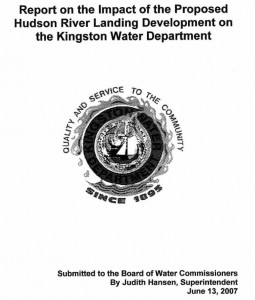
According to this “Report on the Impact of the Proposed Hudson River Landing Development on Kingston Water Department” created in 2007, it says that “the COK had a daily water usage of 3.28 million GPD (today, it is at 3.5 million GPD) and that at that time our ‘safe or dependable yield’ was 6.1 million GPD.
“By definition, the safe yield of any water supply is the maximum dependable water supply that can be withdrawn continuously from a supply during a period of YEARS (how many?) in which the driest period or period of greatest deficiency in water supply is likely to occur.
For Kingston Water Supply that period CONTINUES TO BE THE DROUGHT OF 1957“
If we are reading this correctly, of note:
1. In 2007, the COK provided 3.28 million GPD on average. Today, that number is at 3.5 million GPD. No matter the size of the increase, it illustrates that our community will grow, as will our needs.
2. The 6.1 million GPD “safe or dependable” yield can be “used for a period of ‘years'”. Though not recommended in this document, if it were ever maxed – for how many years could Cooper Lake sustain? We are hearing that same number today in discussions regarding the Niagara Bottling Co proposal. 6.1 million GPD. Has it not changed in 7 years based on, say – climate change? (the report was written in 2007).
3. The COK Water Department is basing the 6.1 million GPD safe yield number on the drought of 1957. That’s over 50 YEAR AGO.
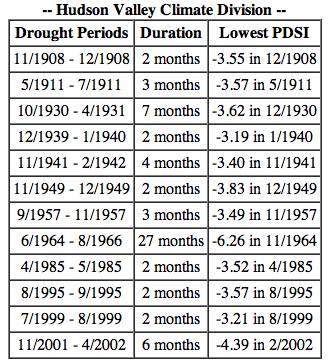
Based on just a little general research – and it all needs to be clarified – the drought of 1957 lasted 3 months. But in 1964 – 1966, a drought in the valley lasted 27 months? What about the 2012 drought? What were rainfall averages in the are from 1950 to today? I’m guessing there is enough data out there for a more current number – and I’d say that it appears that hasn’t been done, and it sure should have been prior to the Kingston Water Department issuing a “Will Share” to the proposed Niagara Project.
Due diligence COK officials.
The Public Trust Doctrine: Protecting Water Resources
“Much of the battle to preserve and protect water resources happens at the state and local levels – in any number of policy choices advocated and made by individuals, organizations, companies, and governments. In recent years, water activists have begun to deploy a new tool geared to shape these decisions. Long-established in legal jurisprudence, the public trust doctrine holds that certain natural resources belong to all and cannot be privately owned or controlled because of their intrinsic value to each individual and society. While water resources protected under the doctrine may not be monopolized by private entities, they nevertheless face great strains today from private use and misuse.”
READ: The Public Trust Doctrine: Protecting Water Resources
READ: “Restoring the Trust: Water Resources and the Public Trust Doctrine: A Manuel for Advocates”
NEW! READ: “The Mono Lake Case, the Public Trust Doctrine, and the Administrative State”
What to Expect: October 7th Common Council Meeting in Kingston – Public Comment Session
VIEW the post on KingstonCitizens.org
VIEW the event invitation on Facebook
WHAT
Kingston Common Council Meeting
Public Comment
WHEN
Tuesday, October 7th at 7:30pm
WHERE
Kingston City Hall
Council Chambers (top floor)
420 Broadway (across from the Kingston High School)
Kingston, NY
###
By Rebecca Martin
It’s great to see so many residents and neighbors planning to attend the Common Council meeting on Tuesday, October 7th to speak or to simply be present on the proposed Niagara Bottling Co. project.
As you know, the Niagara Bottling Co. project came out of the blue for most everyone with an early article in the Times Herald Record (September 10th) and shortly after, making front page news in both the Daily Freeman and Kingston Times. From the proposal presented by Peter Romano of the Chazen Company to the Town of Ulster Planning Board on September 16th, Niagara Bottling Co. expressed their desire to begin their build in 2015. In doing so, they would be using the City of Kingston’s Cooper Lake to bottle and to sell as well as scouting out other ‘spring’ sources in Ulster County and beyond. The project was approved to be sent for a SEQRA review with the Town of Ulster Town Board taking the lead. A resolution was granted on 9/18/14 – just about the time the public became aware by the media. Romano’s presentations were not on either agendas posted by the Town of Ulster.
Because of the swiftness of it all, KingstonCitizens.org prepared a Facebook event so that the public could go in front of the Common Council as soon as possible. Although our passion for the subject is a no-brainer, this effort also illustrates how important it is to the people for transparent processes to be a priority for all local municipalities. Local officials, take note.
(It may be necessary to do the very same thing at the next Town of Ulster Town Board meeting, too. Their next Town Board meeting is on Thursday, October 16th at 7:00pm. Public comment appears to occur later in the meeting. Stay tuned).
WHAT TO EXPECT. WHAT TO DO
1. ARRIVAL: We expect a very large turnout. The meeting begins at 7:30pm, so please plan to arrive early (7:00pm) so to find parking, to sign-up to speak when the list becomes available and to get a seat. It’ll be standing room only.
2. KINGSTON COMMON COUNCIL: It appears that the Common Council were caught off guard as much as we were. Many, if not most, are as concerned too. As a first step, lets work with the council in finding a solution by including an action that you wish the Council to take that is well within their jurisdiction and abilities. We want them to come back to the table with an action in response to the public’s requests.
In Kingston, those that issued the ‘will share’ was City of Kingston Superintendent Judy Hansen of the Kingston Water Department. As an independent board, The Mayor of Kingston is the only public official who is a member. Ward 2 Alderman Brian Seche was given the role as council liaison, though it is unclear if he ever attended a meeting. The council, unfortunately, was never alerted.
Suggested Actions to request:
– For the Common Council to organize a public hearing/debate with city officials and guest speakers (such as Food & Water Watch).
– That a resolution be drafted to protect groundwater and Kingston’s surface water (Cooper Lake) from being being sold to private companies to bottle and to sell.
3. PUBLIC COMMENT: The public is taking advantage of the council meeting “public comment” period where anyone is able to speak. On his evening, we will be discussing Niagara, the use of Cooper Lake, and other items. As per council rules, council members “are not allowed to engage in debate during this period.” If the project gets any further, there will be time for debate and more. That’s a promise.
3. COMMENT LENGTH: Because of the number of people who will want to speak on the 7th, we ask that you come prepared with a statement. What is typical is that a speaker is given 3 minutes each. Try to keep it to that length and as noted above, consider ending with an action that you wish the Kingston Common Council to make that is in their jurisdiction.
4. THOSE IN FAVOR…: Jobs will be the argument made by those who attend in favor of the Niagara Bottling Co. project. For those who wish to, please prepare facts to counter.
5. FILMING: The public comment period will be filmed.
If you have further questions, please send them along to Rebecca Martin: re*****@**************ns.org
AUDIO: Niagara Bottling Co. Proposal Presentation for the Town of Ulster
The following is Audio from both the Town of Ulster Planning Board meeting on 9/16/14 and the Town Board meeting on 9/18/14.
TAKE ACTION: Print Materials for Public Distribution on the Niagara Bottling Co. Proposal.
Here are print materials for public distribution in both English and Spanish on the Niagara Bottling Co. and how you can help to get the word out for more citizen input on the proposed use/purchase of Kingston City Water.
Print out and make copies for your neighbors who do not have a computer. Help us to fill Common Council Chambers on October 7th at 7:30pm to speak, listen and support during Public Comment.
IN ENGLISH:
DOWNLOAD: KingstonCitizens.org: Page One
DOWNLOAD: KingstonCitizens.org: Page Two
Jobs and the Promise of Urban Agriculture
IN SPANISH:
Jobs: Urban Agriculture and Niagara Bottling Co.
By Rebecca Martin
Niagara Bottling Co. wants to come to the area (tax free) to bottle and to sell 1.75 million gallons of Kingston City Water (Cooper Lake) per day. The Water may be tax free too. It is unclear whether or not that to be the case at this time.
The City of Kingston’s Water Department has provided a ‘will share’ letter to the project, but has not yet negotiated a rate (probably because they can’t without the Common Council’s permission).
With an estimated 260 trucks per day coming and going out of the site! That’s a lot of trucks.
According to their proposal, ALL FOR 160 JOBS when the facility is working at full capacity.
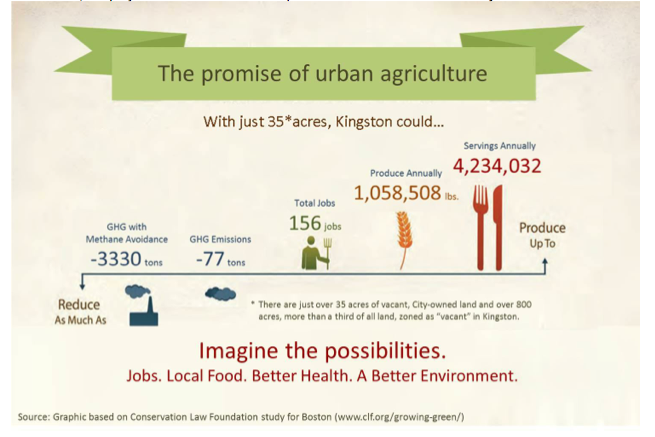
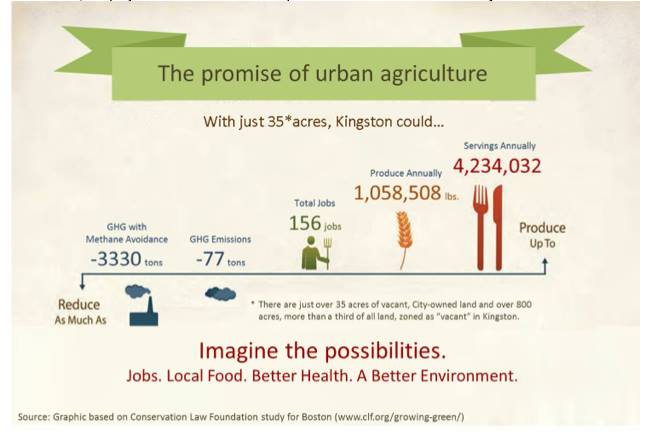
LOOK HERE. Based on an Urban Agriculture study that was created specifically for Kingston, the City of Kingston has approximately 800 acres of zoned ‘vacant’ land in Kingston. With just 35 acres working for us inside the city, we would create approximately 156 jobs. Kingston is way ahead of the curve on the Urban Ag front in the Hudson Valley, too.
We can do this, Kingston.
READ THE REPORT
ON URBAN AG IN KINGSTON
Kingston Citizens: Niagara Bottling Company Project. YOUR WATER IS IN PLAY.
By Rebecca Martin
We have recently created a Facebook invitation for the next Common Council meeting on Tuesday, October 7th. Please consider coming to speak during public comment (at the beginning of the meeting) on the proposed Niagara Bottling Co. plan to bottle and sell Kingston City Water.
The timing here is crucial, given that the group has apparently been in private talks with City officials for several months. Media reports say that they are planning to get moving as early as 2015.
The Comprehensive Plan Steering Committee Meeting 9/18/14
Attached is the recent Comprehensive Steering Committee meeting held at Kingston’s City Hall led by Consultant Shuster Associates. A new 85 page Comprehensive Plan draft was distributed to the committee (according to some, about a week ago). It is not available at this time for the public.
The Steering Committee is now set to read the document and make new comments by October 3rd. Shuster Associates hope to pass off a final pass to the Committee to present to the public by years end.
As Deb Brown (Ward 9 Alderwoman) is the Liaison from the Common Council to both the CP Steering and Zoning Committee, it is reasonable to request that any interested public have access to the draft plan to review accessibly on the City of Kingston’s website.
We’ll be updating this page to highlight important moments for the public.
Brought to you by KingstonCitizens.org. Filmed by Kingston News.
@ 33:05
Alderman at Large James Noble: Any other questions? If not…
Emilie Hauser: Is there public comment?
AAL James Noble: Public comment?
A New Draft of Kingston Comprehensive Plan Effort “2025” Revealed on September 18th at 6:00pm.
By Rebecca Martin
A new draft of the City of Kingston’s Comprehensive Plan will be revealed at a public meeting scheduled for THURSDAY, SEPTEMBER 18th at 6:00pm in Council Chambers at Kingston City Hall. Kingston News will stream the meeting live and make it available online made possible by KingstonCitizens.org
What is a Comprehensive Plan?
What is a comprehensive plan? According to a Land Use series written by Iowa State University’s University extension, it is:
“A comprehensive plan, also known as a master or general plan, is a collection of information and materials designed to guide the future development of a city or county. Such a plan can provide a community with a firm foundation for policy and action that will allow it to function more efficiently and effectively. It can strengthen communities’ policies and legislation, and it also can promote a more certain future.
Although a comprehensive plan can do all of this and more, many places have outdated plans that serve little function. Some cities have more current plans but fail to rely on them in making development decisions.”
Next to a good consultant, the most critical part in how a Comprehensive Plan is created is through ‘significant public participation.’
“The creation of a useful comprehensive plan involves a great deal of research, calculation, and discussion. The development of many of the plan elements requires a high degree of technical knowledge. For this reason, the process is best guided by trained professionals. Even cities with a planning department often hire a consultant to create their comprehensive plan. Either way, the plan should include significant public participation. Numerous public meetings should be arranged and special effort should be made to encourage attendance and disseminate information about the process.
The entire process can take years to complete. Once the plan is finished, the planning commission and the city council should formally approve the document. Although the comprehensive plan does not contain actual laws or regulations, this formal approval will lend strength to future legislation that is based upon the plan. Likewise, future work by any city agency or body should be compared to the comprehensive plan and should be consistent with it.
Finally, it is important to realize that once in place, the comprehensive plan is not an infallible or unchange- able document. Times and conditions change, and some of the forecasts the plan was based on may prove inaccurate. The plan should not be changed out of convenience but can be updated when necessary so that it continues to provide an accurate picture of how the community wishes to progress.”
Kingston 2025
The City of Kingston last created a citywide master plan in 1961 led by the consultant Raymond & May and that also included the work of a young Daniel Shuster as project planner.
In today’s world, generally a citywide Comprehensive Plan can conservatively costs upwards to $200,000.00 or more with many years of strategic public outreach depending on the size of the community.
In 2010 towards the end of then Mayor James Sottile’s second term, the City of Kingston’s planning office found an opportunity to bond monies that resulted in $96,000 to undertake a citywide Comprehensive Plan for Kingston. It passed unanimously through city council.
After sending out an RFP (Request for Proposal) the city received around sixteen (16) proposals from consultants all around the area and beyond. After whittling it down to just four (4), do you know who was selected? Shuster and Associates led by an older Daniel Shuster! The same consultant that the city hired back in 1961 on the cusp of urban renewal when a great portion of the Rondout was allowed to be torn down.
A Comprehensive Plan Steering Committee was created early in the process and community members selected were either professionals in their field or community members by Alderman-at-Large James Noble and City Planning Director Suzanne Cahill. Since then, there has been what some consider a very light effort to engage the pubic with a single online survey and public visioning event . Several committee meetings over the years have taken place, also open to the public (though the public was encouraged to attend and listen rather than participate).
A citywide plan is a whole lot to do for $96,000. Luckily (and not surprisingly to all of us watching) the meat of the plan was supplemented by the hard work of dedicated citizens on subjects that encompass: Historic Preservation, Urban Agriculture, Bluestone surveys, Rail Trails, City Parks, Complete Streets, Climate Action Plan, Flooding Task Force and more. Some of which were not funded at all by the City of Kingston. They were gifts to you and me. You can find all of these studies on the Kingston 2025 webpage.
I believe the initial proposal for the consultant was two years which we are well over by now with the plan not complete and, there is still zoning to do. Currently, a volunteer group has been assembled to take on this enormous and critical task. Who are they and how were they selected? When do they meet?
Though perhaps unpopular, maybe we should have a conversation with our elected officials about the prospect of leveraging this effort for further funding so to get it right. After all, what’s another couple of years? We’ve waited this long.
PS – Lets make certain that in the new CP it is required that the city stay current with this document and update it at least every 5 years where necessary. Doing so will not only keep Kingston current, but save taxpayers a great deal of money to not have to orchestrate an overhaul as we are now in the foreseeable future.
A new draft of the City of Kingston’s Comprehensive Plan will be revealed at a public meeting scheduled on THURSDAY, SEPTEMBER 18th at 6:00pm in Council Chambers at Kingston City Hall. Kingston News will stream the meeting live and make it available later online
Other relevant articles on KC.org