
By Rebecca Martin
A new statewide report from New York River Watch exposes a regulatory loophole that allows toxic leachate from landfills to enter New York’s rivers and lakes.
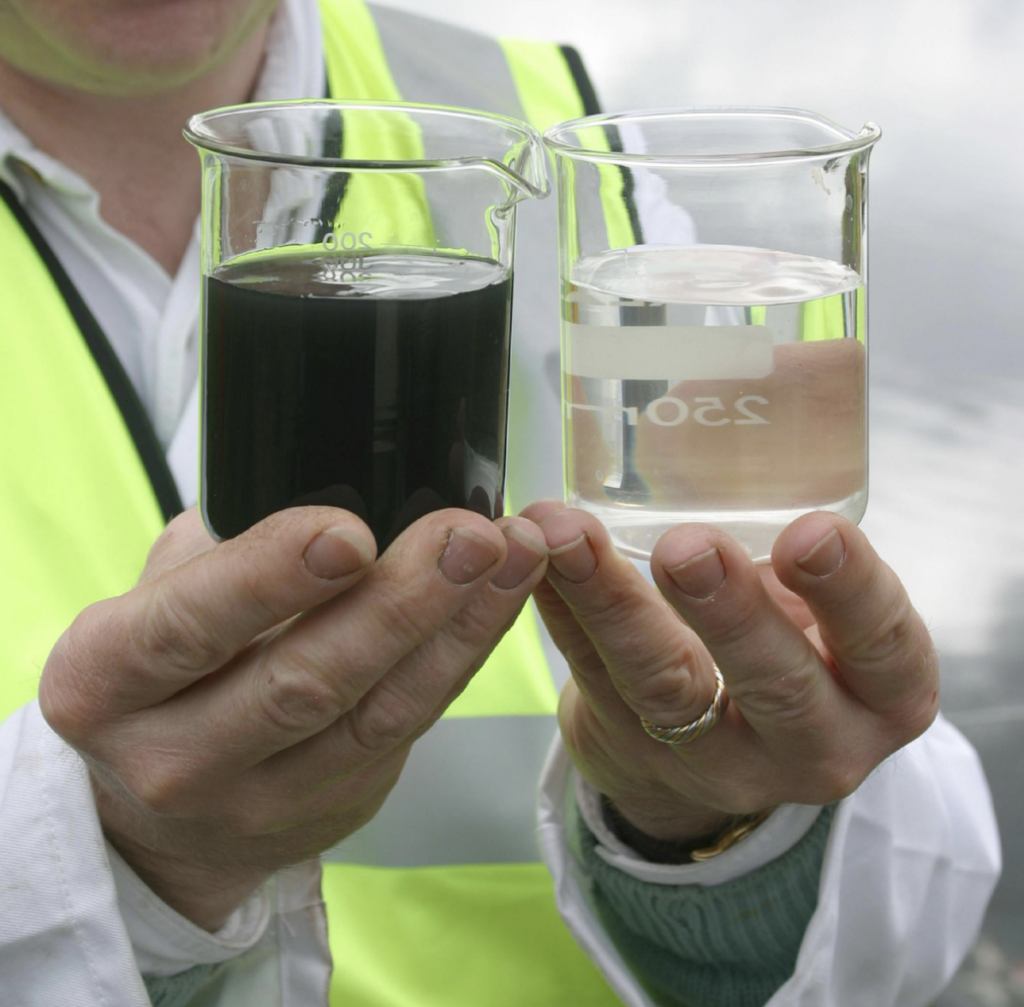
During the report’s five-year study period, more than half a billion gallons of landfill leachate—highly contaminated “garbage water” created when rain and snowmelt move through buried waste—were sent to municipal sewage treatment plants each year from 2019 through 2023. While the report documents five years of data, this practice has been going on for decades.
The report, The Leachate Loophole in New York State, found that approximately 167 million gallons were ultimately discharged into rivers and lakes designated as drinking-water sources—about one-third of the statewide total.
The Hudson River was among the four waterbodies receiving the largest volumes, along with the Mohawk River, Lake Ontario, and Niagara River.


The City of Kingston Is Part of the Statewide Problem
This statewide report reveals that the problem is happening right here in Kingston, where garbage water is being sent to our municipal sewage treatment plant, discharged into Rondout Creek, and carried directly into the Hudson River.
Landfill leachate can contain PFAS, heavy metals, pesticides, and other industrial pollutants. Yet instead of being treated at the landfill, it is often trucked or piped to municipal sewage treatment plants designed primarily for domestic sewage.
The scale of the problem goes far beyond any single contaminant. EPA lists 86,000 unique chemicals that are used in manufacturing or processing in the U.S., not including chemicals used in foods, drugs, and cosmetics, with more added everyday. Many of these chemicals ultimately become part of the products we use, the waste we throw away, and potentially the leachate produced when that waste is buried. We cannot know what we are not looking for.
That makes focusing on any one contaminant an unrealistic way to address treatment of garbage water. However, if PFAS is the “poster child” chemical of concern today, here is a sobering truth: chemical companies can create and introduce synthetic chemicals faster than we can understand them, regulate them, or protect ourselves from their consequences—because in the United States, the burden of proof falls on the public to demonstrate harm after exposure, rather than on manufacturers to prove safety before these chemicals enter our products, communities, and environment. The number of known PFAS chemicals has grown from approximately 14,000 to more than 21,000.
Twenty-one thousand.
And that number will continue to grow because manufacturers can continue introducing new chemicals without first having to demonstrate that they are safe. Even more concerning, some PFAS treatment methods can create new PFAS compounds that we don’t even know exist. We are trying to manage a problem involving more than 21,000 known PFAS chemicals, while New York’s enforceable drinking-water standards currently address just two: PFOA and PFOS.
Two.
That is one reason we should not be sending landfill leachate containing potentially thousands of synthetic chemicals into sewage treatment plants and relying on those facilities to protect our rivers and lakes that serve as drinking-water supplies to more than 2-million people statewide.
In the case of the Hudson River, according to the report, 73.4 million gallons of leachate entered the Hudson between 2019 and 2023, including approximately 5 million gallons discharged near Hudson 7 drinking-water intakes. Nearly 4 million gallons of that passed through the City of Kingston Sewage Treatment Plant, which accepts leachate from the Town of Hurley, Jockey Hill, the Town of Ulster, and the Town of New Paltz.
“The findings in this report raise significant concerns for the more than 107,000 residents who rely on the Hudson River as their primary source of drinking water,” said Rhinebeck Mayor Gary Bassett, Chair of the Hudson River Drinking Water Intermunicipal Council (Hudson 7). “Protecting drinking water requires a proactive approach that prevents pollution from reaching the river in the first place, rather than relying solely on treatment after it enters the drinking water supply.”
New York State has proposed new regulations for the onsite treatment and disposal of leachate at landfills with a public comment deadline of September 9. We encourage Kingston community members to take action. Although these regulations are critically important—developing new requirements and treatment capacity will take time.
We cannot wait years to address a problem we know is happening today. Kingston should stop accepting raw, toxic garbage water at its sewage treatment plant now.
But Kingston cannot solve this problem alone. Our state representatives and the New York State Department of Environmental Conservation—whose permitting framework has allowed these loopholes and gaps to persist—must step in immediately to help Kingston and affected landfills find a safe short-term solution.
###
Read the Report and View the Interactive Map
www.leachateloophole.org
Take Action
https://leachateloophole.org/take-action/
New York has a once-in-a-generation opportunity to get this right. DEC must bring together the best scientific, engineering, and public health expertise to create a plan that truly protects our water, communities, and environment. The state must not create a system that shifts the costs and consequences of toxic pollution onto communities, and the landfills that profit from managing this waste must be held accountable. Public comment is open through September 9.
Attend Public Webinars to learn about the report and answer questions
https://leachateloophole.org/webinars/
Join us for public webinars on Thursday, August 13 at noon and 6pm, to learn about the report’s findings, the implications for New York’s drinking water and environment, and what can be done to close the leachate loophole in New York State.