Ulster County residents: Speak up. Urge the Ulster County IDA to reject CHPE’s proposed 30-year PILOT and demand a fair deal for local taxpayers.
By Rebecca Martin
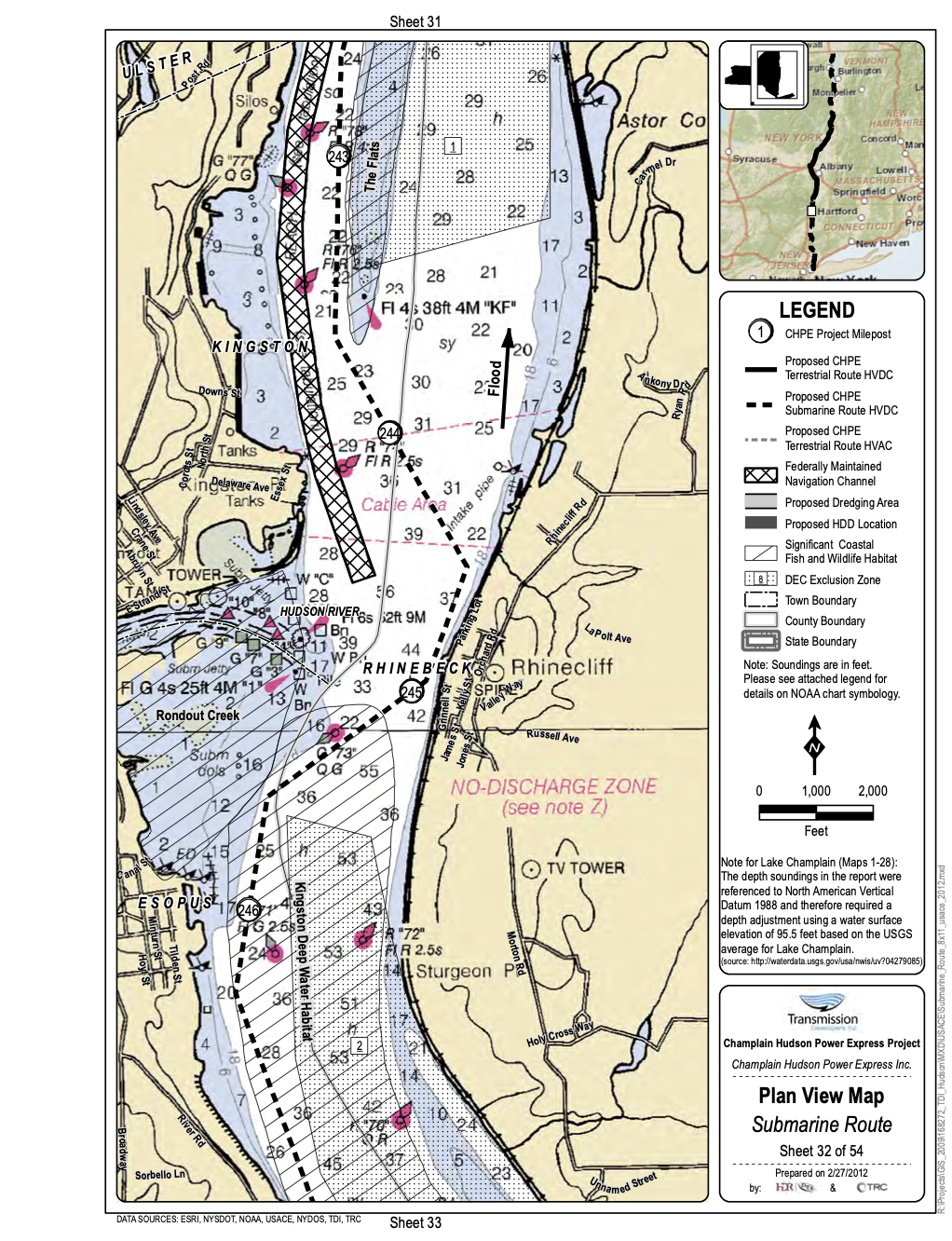
The Champlain Hudson Power Express (CHPE) is a 339-mile transmission line designed to carry Canadian hydropower to New York City. It was developed by Transmission Developers Inc. (TDI), which is owned by Blackstone, one of the world’s largest investment firms. CHPE itself is a privately owned project backed by Blackstone.
The project has secured its power and transmission arrangements, closed its financing, built the line and begun commercial operations. The company says it needs a PILOT for long-term financial certainty. But why should Ulster County taxpayers give it a 30-year tax break when the project is already built, financed and operating?
New York State has already invested heavily in CHPE. The line went offline twice in July 2026, including an extended outage caused by a cable problem during its first summer of operation. New Yorkers deserve reliable service from a project backed by substantial public investment.
What CHPE told Ulster County in 2021
When CHPE first came before the Ulster County Industrial Development Agency (UCIDA) in 2021, it proposed approximately $29 million in PILOT payments over 30 years, compared with an estimated $94 million in property taxes without the agreement. The company argued that a PILOT was necessary to secure financing and that property taxes would be one of its largest operating expenses.
Board members questioned why the county should accept roughly one-third of the estimated tax revenue and asked what Ulster County would get in return. Todd Singer, Executive Vice President of TDI, faced questions the company couldn’t answer, including how many of the 1,400 projected construction jobs would go to Ulster County residents. CHPE could not provide a local estimate.
The company also pointed to a $117 million environmental fund and a $40 million Green Economy Fund for workforce development as project benefits.
Five years later, those questions about local jobs and community benefits remain. But the project itself has changed dramatically. Construction began in November 2022, major construction was completed in January 2026, and the line entered commercial operation on May 13, 2026. CHPE’s current application says the cables are installed, no further construction is planned, and no permanent on-site workforce is needed.
Yet CHPE is back asking for a 30-year PILOT. Its November 2026 application puts the Ulster County project value at approximately $98.49 million. The estimated first-year property tax bill is $2,010,605. Under the proposed PILOT, the first-year payment would be just $502,651—a 75% reduction.
The proposed payments total approximately $34.46 million over 30 years. CHPE is also asking for a 30-year term, twice the 15-year term in UCIDA’s standard policy for comparable facilities.
Impacts on Local Governments and Schools
Kingston residents should know how the proposed payments would be divided among the county, city, school district and other taxing jurisdictions—and how much each would give up over the 30-year agreement. The IDA should make those numbers public before approving the deal.
The company says the PILOT would provide long-term financial certainty and satisfy financing covenants. But CHPE closed its initial financing in November 2022 and secured additional financing in June 2026. The line is built and operating. So why does it need a 30-year tax break now, and why should Ulster County taxpayers agree to a 75% reduction in the first year’s estimated taxes?
CHPE’s Deviated PILOT and How Dutchess County Is Responding
CHPE is seeking what is known as a deviated PILOT—a payment in lieu of taxes that departs from an IDA’s standard tax incentive policy. The deviation can involve the length of the agreement, the amount paid, or other terms. In this case, CHPE is asking for a 30-year agreement, twice UCIDA’s standard 15-year term for comparable facilities, with a substantial reduction in property tax payments.
There is a legitimate reason for long-term PILOT agreements. New York’s special franchise assessments for utility property are established annually and can be challenged, creating recurring disputes and costs for local governments. A negotiated agreement can give taxing jurisdictions predictable payments instead of years of assessment fights.
But predictable payments should also be fair payments, and there must be a clear public benefit. CHPE is delivering electricity to New York City, not Ulster County. Its application says no permanent on-site workforce is needed, and its construction jobs were temporary. What lasting economic benefit is Ulster County receiving in exchange for a 30-year tax break?
In Dutchess County, its IDA has prepared a draft counterproposal to CHPE’s 30-year request. Rather than accept the company’s proposed schedule, the draft seeks payments much closer to the present value of full property taxes. It would generate approximately $76.5 million over 30 years, compared with CHPE’s proposed $60.8 million. The IDA estimates the present value of the counterproposal at about $30 million, nearly equal to the estimated $30.3 million present value of full taxes.
The draft also calls for CHPE to waive challenges to its special franchise assessment during the agreement. It has not yet been approved, but it shows that a county can negotiate long-term certainty without accepting a major reduction in tax revenue.
Where are the local jobs and benefits?
As outlined above, CHPE has touted construction jobs, statewide economic projections, and millions of dollars in environmental and workforce-development funds. But it has provided no accounting of how many jobs went to Ulster County residents, how much funding reached local communities, or what lasting economic benefits the county will receive. Its application says no permanent on-site workforce is needed.
CHPE has built the project and begun operations. Yet it wants a 30-year agreement and a 75% reduction in its first-year tax payment. Ulster County should not approve this proposal without a clear, documented public benefit.
TAKE ACTION: Urge the IDA to reject CHPE’s proposal and negotiate an agreement that protects local taxpayers.
A public hearing has been authorized, but no date has been announced. Watch the Ulster County IDA website for details. When the hearing is scheduled:
- Attend and speak up.
- Ask why a project already built and operating needs a 30-year tax break.
- Ask what lasting economic benefit Ulster County is getting in return.
- Ask why taxpayers should accept a 75% reduction in the first-year tax payment.
Show up. Speak out. Demand that CHPE pay its fair share and not simply what Blackstone/TDI wants to pay.
RESOURCES
A note to readers: PILOT agreements, particularly those involving utility property and special franchise assessments, can be complicated. We’ve done our best to explain the terms and numbers in plain language. This article is based on information available as of November 25, 2026, including CHPE’s application materials and public IDA documents. Additional information may become available. We encourage residents to review the source documents, ask questions, attend the public hearing, and share any information that may add to or correct the record.