
What If We Stopped Treating Food Waste Like Garbage? A conversation with Shabazz Jackson

Photo credit: Michael Isabell

By Rebecca Martin

There is something magical about watching food waste become soil.

I would know, because I’ve been doing it in my own backyard this summer—with a little help from Shabazz Jackson and Josephine Papagni of Greenway Environmental Services.

One principle Shabazz and Josephine shared with me: waste should be managed as close to where it is generated as possible. And what could be closer than our own backyards?

In just a couple of months, I’ve been turning about 20 pounds a week of household organic material into compost—all in my little Earth Machine composter that they provided for me. At that rate, my backyard will process more than 1,000 pounds, or roughly half a ton, of organic material in a year.

Think about that. Half a ton of material getting a second life right here at home—not hauled away, buried or burned, but turned into healthy soil that helps create beautiful gardens.

And I’m not just breaking down vegetable scraps and other organics, but meat and oils, too—something I never thought would be possible in my little home composting system. No maggots. No flies. Just red wigglers. My compost has become such a rich, healthy ecosystem that the jumping worms can’t tolerate it. 

And my backyard isn’t unusual. Roughly two-thirds of Ulster County’s housing units are single-family, detached homes—that’s tens of thousands of households with outdoor space. If more of those households composted even 20 pounds of food waste a week, as I do, we could keep thousands of tons of organic material out of the waste stream every year. 
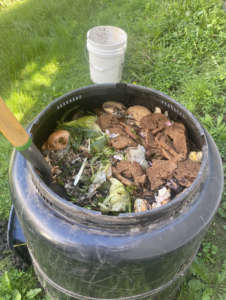
I remove at least 20lbs of organics from my kitchen every week.

In Kingston, the backyard composter doesn’t have to stand alone. The City’s community composting program gives residents a way to keep the practice going year-round—when backyard composters freeze in the winter, residents can bring their food waste to the community system instead.

That’s the power of thinking about organic waste differently. We don’t need one giant solution—we need a network of local solutions working together: backyards, community composting programs and transfer stations. And Greenway has figured out how to make one of the smallest pieces of that system—the backyard composter—remarkably efficient.

That’s what makes Greenway’s invention so exciting. They’ve taken the natural process of decomposition and figured out how to make it work quickly and cleanly in an urban backyard—even with meat and oils. What once seemed like “waste” can become a resource right where it is generated. And that’s something I want everyone who reads KingstonCitizens.org to know: you can do this, too.

###


Who are you, and how long have you been doing this work?

Shabazz Jackson: Greenway Environmental Services is a regional organics recovery and soil company. We collect and process food scraps, leaves, brush, logs, pallets, and other organic materials and transform them into compost, mulch, topsoil, and specialty soil blends rather than sending them to the landfill. Our philosophy is to recover the organic fraction of the waste stream and return that fertility to the soil, while helping protect groundwater and surface water. We also design zero-waste systems and work with colleges, municipalities, businesses, and other institutions to develop and manage food-waste programs.  We’ve been doing this work for more than 50 years. I’m an inventor, but what we invent are natural systems. The challenge is to take a process that nature designed to happen slowly and redesign it so that it works efficiently in an urban environment. We’re essentially learning from nature and figuring out how to make those systems work at the scale and speed that our communities need.

How do you do that?

SJ:  In nature, organic material breaks down slowly and feeds small organisms that depend on it. That’s a good system for a forest, but in a city or neighborhood, we don’t want food waste sitting around, attracting maggots and flies and creating odors. We work with nature, not against it—to take the biological process nature designed and adapt it to the way we live. And we’ve succeeded at doing that.

What exactly have you invented?

SJ: The key is to engage during the decomposition process. We’re imitating the human digestion system. It’s a form of biomimicry. We give it the right biology and the right environment to decompose efficiently from the start.

We start with a rapid decomposition medium that goes into the Earth Machine, like the one you have, along with the food waste. We make it by mixing actively decomposing food-waste compost with wood chips from the local tree-service industry. When a tree is removed, the tree service grinds it into chips, and we use some of those locally sourced chips in our medium.

The medium introduces an active biological process right from the beginning. Instead of letting food waste sit around and begin to rot, we’re creating the conditions for it to break down quickly and aerobically. That’s the key.
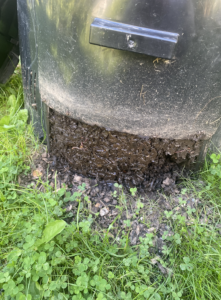
The “medium” at the bottom of my composter is now what I use to place on top of my weekly collection. It’s rich with red wigglers.

The second component is our odor-control blend, which is what you call the “lasagna.” Every time you add food waste to your kitchen container, you simply sprinkle a handful of the blend over it. It’s a biological filter that absorbs the sulfur generated when food rots.  The odor control blend is a mix of completely cured and finely screened food waste compost and wood shavings which is effective in controlling moisture.  At present, we are field testing the materials in preparation for household distribution.  It’s available in bulk at our community composters in New Paltz and Poughkeepsie.  We make the blend at our facility using clean wood shavings collected from a modern wood shop. The shavings are a clean byproduct of that process. We mix the kiln-dried wood shavings with fully decomposed and cured food-waste compost that has been finely screened. The blend inoculates the food with the bacteria needed right at the beginning of the process. That’s what makes it work.

So the goal at the start is to stop food from rotting?

SJ: Yes. The goal is to help it decompose in the right way from the start when it matters. 

Why is the beginning of the process so important?

SJ: Because that’s where you establish the biological environment. We’ve inherited a culture that treats food as garbage as soon as we’re finished with it. Think about what happens in a typical household. Once a week, you take out a load of rotting food. Maybe you’ve separated it from the rest of your garbage and put it in a container provided by the municipality. But you’re still carrying over the culture of disposal. And the problem is that rotting food is inherently difficult to manage that way. It’s wet. It attracts flies and maggots. It smells. We’re trying to make a cultural transition—a cultural upgrade. At the base of that transition is the idea that we should stop having rotting food sitting around our kitchens. Instead, we need to separate this material and give it the biological conditions it needs from the very beginning.
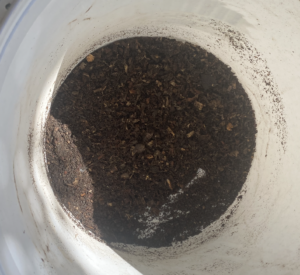
Greenway’s “Odor Control Blend” is the magic sauce! I get 2-3 buckets a month that keeps me in the clear.

And some of the materials you’re using are themselves made from waste?

SJ:  Yes. That’s one of the reasons we can keep the cost so low. We’ve figured out how to take commercial waste and turn it into a resource.

How do you work with local businesses while keeping their food waste as close to its source as possible?

SJ: We want to encourage food waste to go to the closest appropriate local facility. For example, we have a contract with Adams Fairacre Farms, and we also work with the Culinary Institute of America. Both generate food waste locally. Adams has a store in Kingston, and the CIA is in Hyde Park, close to UCRRA. So, in keeping with our principle of managing waste as close to its source as possible, it doesn’t make sense to haul that material all the way to New Paltz when UCRRA is right there. We send their food waste to UCRRA.

So you don’t believe that everything needs to go to one centralized facility?

SJ:  No. There is no one-size-fits-all solution for removing organics from the waste stream. We need to start thinking differently. We’re looking at each waste stream and asking what makes the most sense locally.

How does compost connect to food systems?

SJ: In nature, soil and food are part of the same cycle. Plants take nutrients from the soil, and organic material eventually returns those nutrients to the soil. If we’re designing a sustainable food system, we should be doing the same thing. The composter and the garden shouldn’t be separate—they should be part of one system. You might bring in materials at the beginning to establish a garden. That’s a one-time contribution of material we’ve recovered from commercial sources. After that, the food waste generated in the surrounding community can be broken down and returned to the soil, helping maintain the fertility of the garden. The food feeds the soil, and the soil helps grow more food. That’s how nature works.
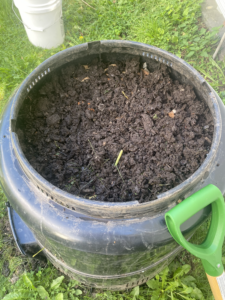
After breaking up my food scraps, I add about a 1/2 inch of medium from the bottom of my composter

Haven’t we already built a decentralized waste system?

SJ: In many ways, we have. Ulster County’s goal is to recover 90 percent of the waste stream by 2050. And the county has already invested in a decentralized system to help get there. UCRRA is the hub, and the 19 transfer stations are the spokes. That’s a significant investment in infrastructure that is already spread throughout the county. So I don’t think the question is whether we should have a decentralized system. We’ve already made that choice. Now we need to develop it. The question is: How do we use the system we’ve already built to recover 90 percent of our waste? That means looking at what each transfer station can do, how we can remove organics from the waste stream, and how we can connect the different pieces.

What does this have to do with the future of Ulster County’s waste system?

SJ: Everything. I think we need to stop pursuing projects like Global NRG and decide what kind of system we actually want to build. There is only one pool of money. UCRRA already has access to roughly $60 million in bonding—enough to invest significantly in a more decentralized system. I’m currently serving on the UCRRA Zero Waste Committee, and I think our first job should be to decide is if we want a centralized system, or do we want to develop the decentralized system we already have?

Why is removing organics from the waste stream so important?

SJ: Because you can’t get to zero waste without removing organics from the waste stream. Food waste is one of the largest parts of what we’re throwing away, and it doesn’t belong in a landfill or an incinerator. It belongs back in the biological cycle. There isn’t one solution that will work everywhere. We need to look at what we’re generating, where we’re generating it, and what infrastructure we already have. And we have to pay attention to our largest industries.

Tourism is a major part of Ulster County’s economy, and tourism generates a tremendous amount of food waste. We can’t seriously talk about zero waste without figuring out how to keep that material out of the disposal stream.

New Paltz gives us an opportunity to demonstrate what this could look like. The Village has a significant tourism economy and a concentration of restaurants and other food-related businesses generating commercial food waste. The Town already has infrastructure at its transfer station. Why not put those pieces together and make New Paltz a model?

The transfer station could take the food waste generated by the Village’s tourism economy, and we could measure what happens when we actually capture that material—how much is diverted, how clean the stream is, what it costs, and how much compost and soil we can produce from it. That would give us a real-world demonstration that could be replicated in other communities across Ulster County.
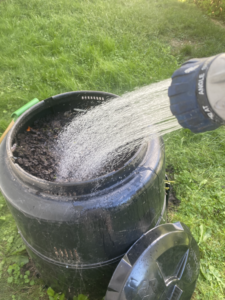
I always water my compost after adding to it, so that it’s damp (not wet). Moisture is required to break organic material down efficiently.

What do you think Greenway’s role is in this transition?

SJ: Greenway has the solution. Our society has the problem. We’ve been preparing for the day when people finally say, “Okay, Shabazz. We’ve heard enough.” When that day comes, we’re ready. In fact, we’re ready now.

Our role was to invent natural systems and figure out how to make them work in the places where people live. Nature has already designed a system for breaking down organic material. Flies, mealworms, bacteria and other organisms do that work naturally. But when we live in an urban environment, we need to manage that same material differently. Our challenge is to create the conditions for it to break down without the flies and the odor.

And that’s where people come in. Maybe you have a small piece of property. Maybe you’ve invested thousands of dollars and countless hours into your backyard garden. You’re already investing in the food you’re growing. Why not take the organic material you’re already generating and turn it back into the soil that makes your garden more productive?

That’s what Greenway is here to do: take what nature designed, adapt it to our urban environment, and use it to meet people’s needs.  We don’t need to start from scratch. We need to connect the pieces we already have—and build a system that keeps organic material close to where it is generated, puts it back into the soil, and move Ulster County toward its goal of recovering 90 percent of its waste by 2050.

If you’re interested in Greenway’s backyard composting program and other services, contact Shabazz and Josephine at: gr*********@*ol.com
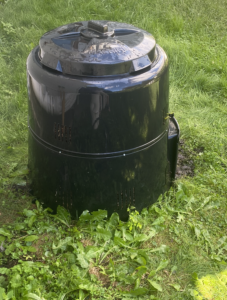

 

Voila! It’s ready to work its magic.


Two upcoming historic preservation talks at the Kingston Public Library

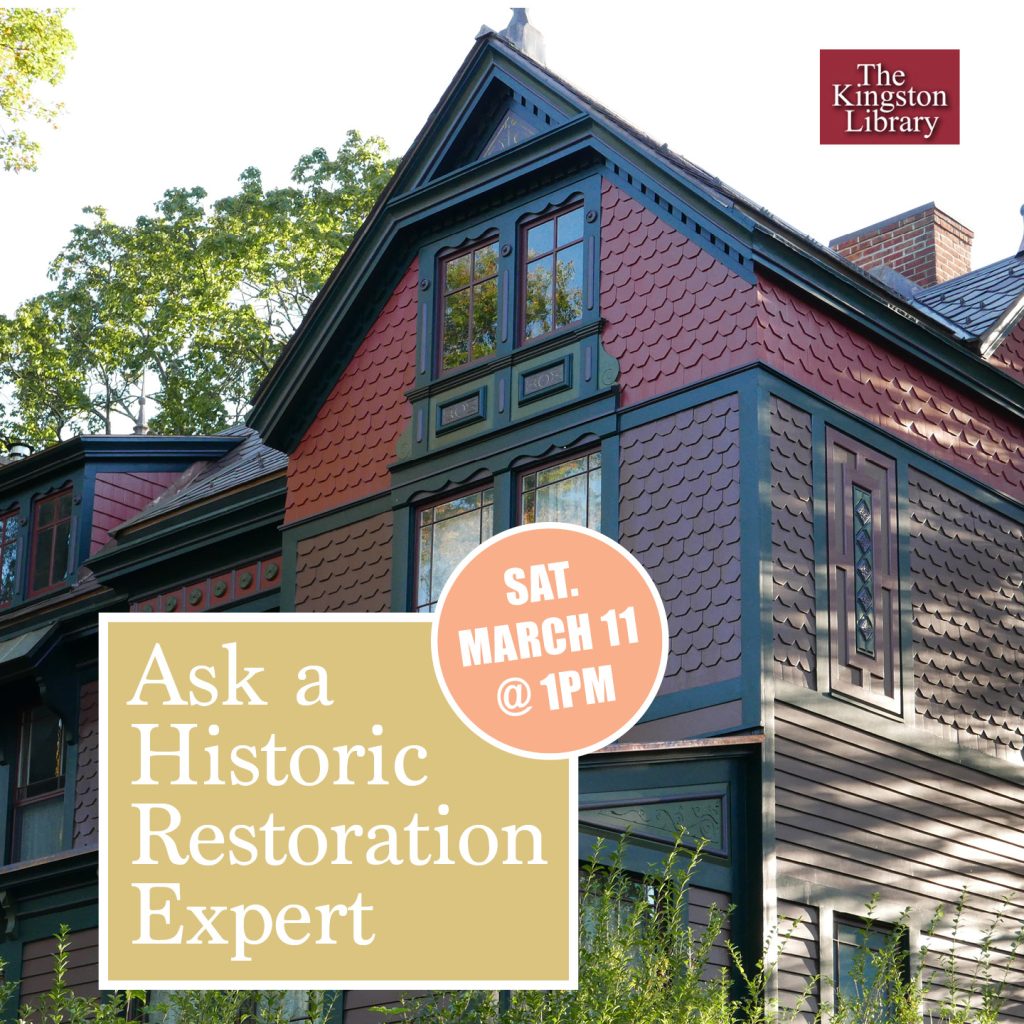
Attention historic preservation enthusiasts and newbies: Kingstoncitizens.org contributor Marissa Marvelli is hosting two free presentations at the Kingston Library that you should know about. The first one, Saturday February 18, is an introduction to researching buildings in Ulster County. She’ll also talk about historic rehabilitation tax credits. The second one, Saturday March 11, will feature Derrick McNab, one of Kingston’s greatest fonts of knowledge when it comes to restoring historic buildings. 

Saturday February 18, 1pm: Research Your Historic House with Marissa Marvelli – Got an old house? Curious about who lived there or when it was built? Bring your questions to Marissa Marvelli, a Kingston local and an award-winning historic preservation professional. She’ll show you the available resources to help you become an expert on your home. Historic maps, deeds, census records, newspaper archives, city directories and other materials contain a treasure trove of information waiting to be mined. 

Saturday March 11, 1pm: Ask a Historic Restoration Expert: Discussion with Derrick McNab – Wondering what to do with your old windows? Got roof repair issues? Thinking about installing new insulation? Want to avoid a bad masonry job? Wondering if your contractor is right for the job? In March, program organizer Marissa Marvelli will hand the mic over to Kingston-based Derrick McNab, an expert in all things pertaining to historic building restoration. His many skills include decorative paint work, plastering, woodworking and finishing, masonry restoration, and slate roofing and repair. He will discuss common restoration and maintenance issues and practical approaches to addressing them.

A (Working) Preservation Guide for Historic Property Owners and Enthusiasts in Ulster Co., NY. Last month, Marissa Marvelli shared a working GOOGLE DOCUMENT with the public and a goal of it becoming a comprehensive preservation guide for Ulster County.  Marissa is a real treasure and we give her thanks for all that she does for Kingston and Ulster County. 

“Leave It On The Lawn, Kingston!” Initiative Marks Its Second Season in 2010

Kingston resident Kate Lawson leads by example.

“Leave It On The Lawn, Kingston!” initiative continues for a second year in the City of Kingston.

The City of Kingston’s Mayor James Sottile, DPW Superintendent Michael Schupp and The Kingston Land Trust hope to save Kingston citizen’s tax dollars for a second year by encouraging residents to mulch their leaf landscape waste.

KINGSTON – With the recent passing of a mandatory leaf bagging law in the city of Kingston, public officials in connection with the Kingston Land Trust are asking residents to “Leave It On The Lawn, Kingston!” for a second fall season. The federal program that was initiated locally hopes to save citizen’s tax dollars by asking them to ‘help Kingston help itself’.

“Mulching leaves takes a serious waste disposal problem and stops it at its source,” says Rebecca Martin, Executive Director of the Kingston Land Trust.  “Additionally, it takes 1/4 of a persons time rather than bagging them, avoids all municipal collection costs and provides valuable plant nutrients stored in leaves throughout the season to fertilize lawns and gardens naturally.”

A helpful brochure will be available at the city of Kingston’s Clerks office, Department of Public Works (DPW) and the Kingston Land Trust offices after October 10th about the program.  To learn more on the initiative online, visit the city of Kingston’s website or contact Rebecca Martin, Executive Director of the Kingston Land Trust at 845/877-LAND (5263) or re*****@***************st.org

Breaking the Chain, Part II

Kingston's new "Harmacy". Poetic justice, as recalled by Rebecca Martin
CVS. Photo by Nancy Graham.

By Arthur Zaczkiewicz

As we continue to slog through this recession (we’re in a double-dip one, according to some experts), there are a lot of actions citizens like you and me can do to help weather this downturn. As consumers (two thirds of our GDP is driven by consumer spending), we have a lot of power to change the economy – especially on a local level.

Read more…

How About a Little De-Tagging During the Citywide Clean Sweep on April 24th?

In the spirit of the upcoming citywide clean sweep event on April 24th, KingstonCitizens.org is giving away ten “Team D’Arcy De-Tagging Kits”  that include spray paint remover, rubber gloves and a full roll of paper towels (towels courtesy of Kingston Natural Foods).   The first ten residents to arrive at the citywide Neighborhood Watch Meeting on Tuesday, April 13th at the Kingston Library will be given one.

I’m going to keep a kit in the car to remove tags when I see them. How about you?

For more on the upcoming Citywide Clean-Sweep, visit this LINK

BEFORE: Graffiti on Wall Street

AFTER: Citizen and community leader Michael D'Arcy takes matters into his own hands and removes blight from our Uptown business district. It's easy for us all to do.

Why Residents Must Continue to Recycle

With the abrupt change made this week to the recycling schedule (that is now bi-weekly) we grew deeply concerned. Not because we think weekly pick-ups are ‘the way to go’. But because the change was made without any effort to inform or educate the public. As it is, through the hard work of Julie and Steve Noble and Jeanne Edwards, Kingston was sort of on the up and up on improving it’s recycling numbers. That might be history unless something is done and soon.

Sure, not every municipality offers recycling to their residents. That may even be where we are heading. The fact of the matter is, Kingston has offered it as a service and we have come to expect it. If more people now feel inconvenienced and decide to trash their plastics and all, we are not only heading in the wrong direction but we are also encouraging a whopper of an expense in the long run.

Why? At this time, Kingston pays UCRRA (Ulster County Resource Recovery Agency) $71 a ton to then ship our garbage up the river some 250 miles. That’s what makes it so expensive. Weigh that against the national average, which is around $42.08 per ton.

Landfills are close to capacity. Perhaps not this year or next, but in the very near future our garbage may be shipped even further away. Now does that make any sense?

So please, hold onto your recycling until your new scheduled pick-up day. Give your bottles and cans an extra wash out to prepare them to sit for a week longer. That only takes a few seconds of your time. If you simply can’t wait, delivering your recyclables, yard waste and brush to the transfer station is free.

Encourage your Alderman to help solve this problem through good discussion and solid examples by looking outside of Kingston to see what might be useful to us.

– Rebecca Martin

Here are a couple of helpful links.

City of Kingston: New Recycling/Yard Waste Pick-Up Schedule

KingstonCitizens.org: Why Pay As You Throw?

KingstonCitizens.org: Plastics By Numbers

Leave It On The Lawn, Kingston! Mulching and Composting Brochure

Making Citywide Composting Profitable

In today’s Daily Freeman, Andi Turco-Levin announces her desire to get behind a citywide composting program for the city of Kingston.

There are many components to discuss on the subject such as residents doing more of it themselves (by mulching leaves and composting bigger pieces of yard waste) and mandatory leaf bagging (a source of controversial discussion).

But whether it’s left curbside, bagged, bundled – whatever – the fact remains that the city is scrambling to find a place for yard waste, as we no longer have a place for it as we have in the past. So what to do?

Take a look at the City of Palo Alto, CA’s model. Interesting indeed. (Taken from the KingstonCitizens.org facebook page. Thanks Brad Will)

What can you do in the meantime?

Leave It On The Lawn, Kingston! Leaf Mulching
Leave It On The Lawn, Kingston! Composting Yard Waste

Kingston Uptown Resident Alliance (KURA) Hosts “How To Appeal Your Property Assessment”

Property Taxes

For some time, I have not only been impressed by KURA (Kingston Uptown Residents Association) but am ever so grateful to have smarts like that on the case of some very pressing issues here in the city of Kingston. They have successfully hosted meetings to expose residents to important information while tackling the complications of such topics as Kingston’s Nuisance Abatement law, the city’s budget and the confusion of our citywide reval and tax structure.

I had the great pleasure to meet and listen to Gerald and Victoria at Ward 1’s community meeting this past February (by the way, if you haven’t yet seen Ward 1 Alderman Andi Turco-Levin’s blog yet, you must.  She is doing an exceptional job at City Hall and in reaching out and listening to her constituents. I highly recommend you bookmark her BLOG ).

On Tuesday, April 20th KURA will host another public information meeting at the Old Dutch Church in Kingston (272 Wall Street) on “How To Appeal Your Property Assessment”. Guest speakers will be Ken Brett, member of the City of Kingston Board of Assessment Review and Mark Grunblatt, Real Estate Attorney in Kingston.

Of course, it must be noted that KingstonCitizens.org learned of  Karen Vetere during the now defunct homeowners tax relief group meeting back a year or more ago. Before and since then, Karen has been extremely helpful in working with residents through the maze of making sure their house values and tax increases were correct. There are many who experienced a doubling in their taxes over the course of a year, almost taxing them right out of their homes in one fell swoop.  In fact, it’s still a real possibility as things currently are.

Sometimes, the city of Kingston officials seem to work against its citizens with a lack of good planning. That’s not to say there aren’t good people working in city government. What I’m trying to get at here, is that in order for this all to work as it was intended, the citizens need to take an ongoing active role in it all. You mustn’t grumble over it either.  Part of the problem is due to a lack of involvement and oversight by the people.

We need to be paying close attention now and we need to stay the course on whatever issue calls us. Constructive changes don’t occur overnight.

Thanks to those mentioned in this post, and to all of the citizen groups new and old who are working to make the city a cool place to live while trying to incorporate every single one of it’s residents so to nurture it into the rich and diverse community that it is meant to be.

“Leave It On The Lawn, Kingston!” Program Launched

It’s no secret that the federal “Leave It On The Lawn” program has done great things in many municipalities nationwide. It has arrived here at home with the support of the City of Kingston in collaboration with the Kingston Land Trust’s garden committee to “help Kingston help itself”  by asking Kingston citizens to consider managing their landscape waste this fall.   The first scheduled leaf  pick-up is October 15th which is only ten days from now.   Come on Kingston Citizens!  Click on the links below to help to get you started. Don’t believe this initiative can save you big bucks in tax dollars and make a major difference in the (and your) environment? Read on….

– Rebecca Martin and Wilbur Girl of KingstonCitizens.org’s  blogspot

Leave It On The Lawn, Kingston! 

The City of Kingston with the support of the garden committee through the Kingston Land Trust asks the citizens of Kingston to re-think bagging their leaves this season.

During the year, at least 20 percent of the solid waste generated by Kingstonians comes from grass clippings, tree leaves and other landscape wastes. Bagging these materials or placing them into the curbside collection system wastes an important natural amendment leading to poor soil quality and costs the people of Kingston more in increased taxes and service fees by the use of additional trucks, labor and fuel.

Approximately half of landscape waste is composed of tree leaves.  The “Leave It On The Lawn, Kingston!” Leaf Management Plan is an environmentally sound program designed to significantly reduce the volume of leaves saving citizens tax dollars while improving their soil quality, naturally.

Options for Managing and Using Leaves
Leaves are truly a valuable natural resource. They contain 50 to 80 percent of the nutrients a plant extracts from the soil and air during the season. Therefore, leaves should be managed and used rather than bagged and placed at curbside for collection.

Here’s what you can do to make some simple and important changes:

Mulching by Mowing
Leaf mowing is the most efficient way to manage your leaves and takes 1/4 of the time than traditional raking and bagging. For larger lawns, though not entirely necessary, this can be more effective when a mulching mower is used. To get started:

  • Mow over your dry leaves in the same manner you would if you were mowing the grass.  If you have a great deal of leaves and a small parcel, rake the leaves out evenly before mowing.
  • Repeat if necessary.
  • Leave your shredded leaves on the lawn for a chemical-free fertilizer that will give beautiful results.
  • You can also rake and transport your shredded leaves to your gardens, shrubs, trees or composter.

Composting Landscape Waste
Kingston’s urban environment allows for many different methods of composting.  There are a variety of composter styles and sizes to choose from, or, simply make your own.

TO COMPOST YOUR LEAVES: take the shredded leaves alone or with other yard waste materials and place in a wire bin or any type of composter of your choosing.  Remember  that the smaller the pieces, the faster they will break down into reusable organic matter.  For a quicker result, turn your materials with a pitch fork or similar tool occasionally.  In time, underneath your compost pile, you will have rich, dark soil for all of your gardening needs.

TO COMPOST SHREDDED LEAVES WITH KITCHEN WASTE:  in an appropriate bin, add equal parts brown and green materials.  “Brown” materials include leaves, straw, non-glossy paper, wood, bark chips, paper napkins and coffee grounds. “Green” materials include fruit and vegetable peelings, rinds, and eggshells.


NEVER add any animal products, oils or hazardous materials.  Turn the pile occasionally to aerate it and make sure it’s moist but not soggy.  The decomposition process can take anywhere from three months to a year.

By composting you’ll have RICH soil for FREE!  It will save time, money and our city’s precious resources.

Get started today and lend a hand to help Kingston help itself.


Environmental Focus on Kingston: Leaf ’em Alone

It’s that time of year again.

This year’s fall season will soon blanket the area in vibrant color.  As the joys of fall harvest fade, we’ll be left with the aftermath of fallen leaves.  The city will begin collecting leaves as of October 15th.  This also happens to be when they stop collecting regular yard waste, so be sure to have your gardens cutback by then.

Leaves may be placed in paper bags or left at the curb for collection.  Bags may be purchased at the City Clerk’s Office in City Hall for $.37 each or $1.85 for five.  DPW workers will begin in Ward 1 and systematically move throughout the city.  Collection will continue until the first snowfall.  After the 15th, you can call the DPW office at 331-0682 to get a better idea of when they will be in your neighborhood.

Municipal leave collection creates serious disposal problems.  Yard waste accounts for nearly 20% of landfill space.  Hauling bags of leaves to landfills costs taxpayers money.  We have to pay the workforce for their time and the fuel for the vehicles used in collection.  Large landfill piles of leaves produce methane gas as they decompose and breakdown.  Some communities have banned yard waste collection for these reasons.

This year why not try something new?  By composting your leaves you’ll have great fibrous, moisture retaining, organic matter to spread on your garden and lawn by next spring.  Plus it’s less work intensive than all the traditional raking, bagging and hauling.

A large variety of store bought composting bins can be purchased just about anywhere in the free trade zone.  But if you’re more of a spend thrift like me, you can make your own at minimal cost.  All you need is some chicken wire and 4 stakes to get started.  Your composting cage can be sized to fit the needs of your yard.

When adding leaves to your compost pile it’s best to keep each layer about 6-8 inches deep before adding a thin layer of soil.  Anything deeper and oxygen may have a difficult time cycling throughout the compost material.  Keep your pile moist and remember to turn the mixture regularly with pitchfork or other such tool.  You can even add in some grass clippings, coffee grounds and egg shells to it.

It’s that easy Kingston.

Another more passive form of composting is to just leave it on the lawn.  For this approach it’s probably better to just stick grass clippings though.  Leaving leaves on your lawn may make you popular with Mother Nature, but it will probably just really irritate your neighbors.  Not to mention that blowing leaves can easily clog storm drains.

Throwing away your leaves is a waste of a great nature resource.  By keeping leaves in our backyards we are all doing our yards, pocketbooks, community and planet a big favor.

Want to learn more about the ease and benefits of composting?  Check out what the DEC has to say about it.

Take this topic back to your Yahoo Ward Group and find out how your neighbors deal with their fallen leaves.

How do you take care of your fall leaves?  Take our survey and let us know!  

– Wilbur Girl

Environmental Focus on Kingston: Give Me A “C”, “S”, “O”!

This year instead of a summer, we’ve had a monsoon season.

On average Kingston receives 47.48 inches of rain a year, with May being the wettest month. This summer alone we’ve been deluged with roughly 17 inches of the wet stuff. While my friends are all bemoaning the loss of blight ridden tomatoes, I’ve been worrying about a problem that runs a little deeper. Yup, I’ve been thinking about combined sewer overflow systems (CSO’s).

Kingston’s antiquated sewer system is a CSO. They were all the rage and considered the newest and greatest in waste flow management along the eastern sea board following the Civil War. The EPA defines these types of National Pollutant Discharge Elimination Systems (NPDES) as “remnants of the country’s early infrastructure and so are typically found in older communities.” They estimate there to be roughly 772 CSO communities in the US today.

A CSO was designed to collect rainwater runoff, domestic sewage and industrial wastewater all in the same pipe. This slurry of toxic sludge is transported to a sewage treatment plant. Periods of heavy rainfalls or quickly melting snow exacerbate the volume of storm water runoff so that it exceeds the capacity of the system. Excess, untreated wastewater instead empties directly into nearby bodies of water – in our case, the Rondout Creek. Also, because of their age, CSO’s often fail or collapse at an accelerated rate.

The city’s CSO problems have been simmering for decades. In the past, city officials have all but turned a blind eye to our failure prone sewer. However, the growing number of orange and white barrels and yellow sawhorses that adorn sagging or collapsed parts of our streets are too becoming difficult to ignore.

The City of Kingston has been recently cited by the DEC for failure to take aggressive action to stem the flow of raw sewage into our waterways. A fully developed plan was due in September 2007. The DEC has warned that the city faces daily fines of $37,500 until corrective action is taken and a plan produced. As a result the Kingston Common Council has approved the borrowing of $93,000 to hire Malcolm Pirnie, Inc. to complete the necessary study, which must be done during the rainy season.

As immense as the CSO issues are that face our community, the average citizen can do plenty to assist with storm water abatement. In the next ENVIRONMENTAL FOCUS ON KINGSTON we’ll discuss the variety of ways this can be achieved.

DID YOU KNOW: What can YOU do?

The city of Kingston has an ordinance that prohibits downspouts to be connected to the sewer system. City ordinance A407-106 states “No person shall discharge or cause to be discharged any stormwater, surface water, groundwater, roof runoff, subsurface drainage or unpolluted industrial process waters to any sanitary sewer.” You can read the rest of the ordinance HERE. Scroll down to the appendix and open Chapter A407: Plumbing Code Administration. You’ll find the entire entry under section A407-106 of Article XVII.

Introducing: Environmental Focus On Kingston

A month ago, I put out the word looking for citizens to contribute to the KingstonCitizens.org blog’s. Thanks to those for being in touch.

I am happy to introduce a new series to KC.org called “Environmental Focus On Kingston” written by citizen ‘journalist’ Wilbur Girl. Below is her profile.

Please feel free to comment on these and all of our pieces, or to take the topic to your Yahoo! Group for further resident dialog.

Thanks, and more to come.

Rebecca Martin

Wilbur Girl is a third generation daughter of Kingston. Her roots can be found grown deep into a hill above the southwestern shores of the Rondout Creek in a home that has been in the family since 1943.

In “Environmental Focus on Kingston”, topics will focus on the simple environmental changes and actions everyday citizens can do like rainwater harvesting, composting, tips for greener living and recycling techniques. Learn more about what your neighbors and local businesses are doing to minimize their impact while maximizing their renewable resources. We’ll also look at trends and what other communities are doing to go green and improve their sustainability.