
By Rebecca Martin
The situation at 32 Abeel Street in Kingston (“Irish Cultural Center seeks to donate Abeel Street site to Kingston” Daily Freeman) may serve as a test case for how the City evaluates the transfer of property as a “gift” when a private project leaves behind unresolved site conditions that may shift long-term responsibility as well as ownership.
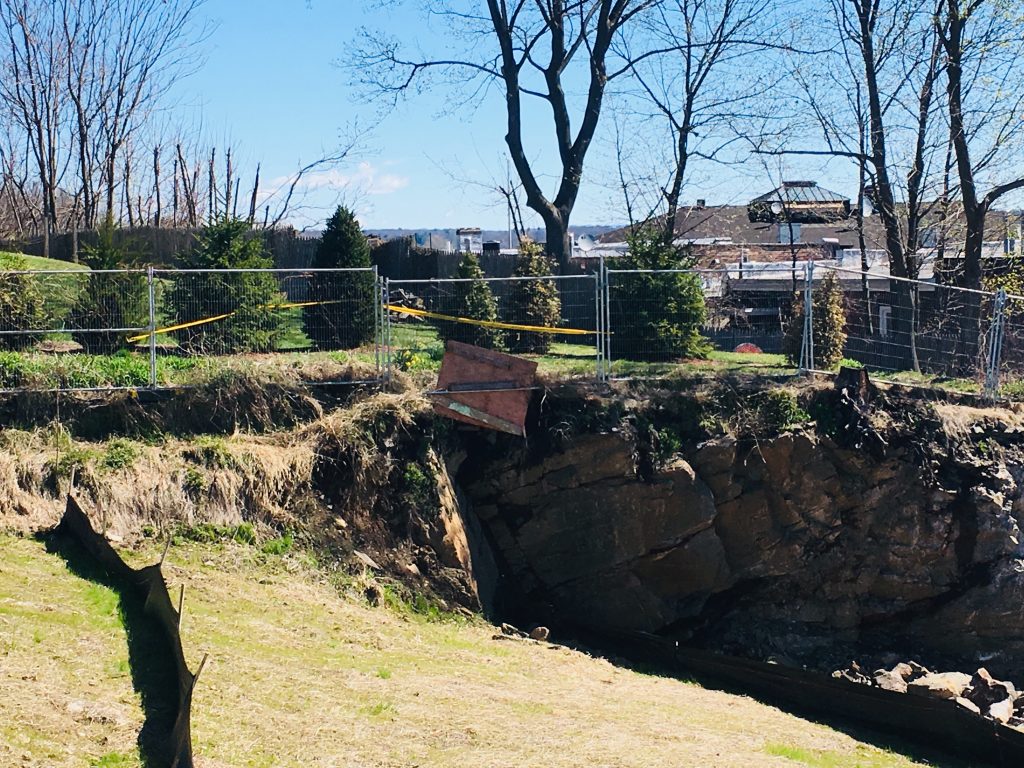
The property was significantly excavated in and around 2018 for the proposed Irish Cultural Center, following years of public controversy, neighborhood opposition, and a process many nearby residents experienced as exhausting and deeply disruptive. That excavation removed a large volume of soil and rock, leaving a steep and highly altered site directly adjacent to neighboring properties and public pathways. While the excavation itself is in the past, the site remains in a substantially changed condition.
These altered site conditions appear to influence how water moves through the area. During storm events, runoff has been observed in and around the disturbed land, and there have been reports over time of erosion along Company Hill Path and impacts to nearby private properties, including driveway movement, soil loss, and changes in slope and drainage behavior.
Now, the property owner reportedly wants to give 32 Abeel Street to the City for free. While that may sound generous, it raises a more important question: what, exactly, is the City being asked to take on?
A land deed can be given away. The physical condition of the land cannot.
If the site continues to cause erosion, concentrate stormwater, or affect neighboring properties, then a “free” transfer may not truly be free. Instead, it could leave the public responsible for an unresolved environmental and engineering problem — along with the future costs of stabilization, mitigation, and long-term management.
Before any transfer is considered, the City should require an independent engineering review of the site’s long-term stability, drainage issues, and likely remediation costs. The City must determine whether this property can be stabilized without creating an ongoing burden for surrounding residents and taxpayers.
Without those answers, the City risks taking on not just the land, but the long-term consequences of past disturbance.
Kingston’s Common Council and administration now face a choice that goes beyond a single parcel: either require full stabilization and accountability before any transfer occurs, or inherit a problem that neighboring residents have already spent years living beside. And as part of any agreement, the current landowner should be required to publicly acknowledge the burden placed on those neighbors—including years of disruption, property damage concerns, and ongoing stress—and issue a direct apology to the affected community.
Nicely put Rebecca. The ICC needs to accept responsibility for their environmental impact on the site and neighboring properties (including the Company Hill Path). The ICC must remediate the site before off loading it to the City.
Thank you. This has been a nightmare for everyone in that neighborhood for nearly a decade. It’s not fair that the ICC cabal dumps the mess on everyone left behind.