Rail Safety Starts at Home: Lessons from Our Conversation with Rail Watch’s Jess Conard

Last evening, we had the opportunity to host Jess Conard of Rail Watch for an engaging and timely conversation about rail safety, emergency preparedness, and the role communities can play in protecting themselves from potential rail-related incidents.

A key takeaway from the discussion was the importance of prioritizing rail safety in local emergency planning. Conard emphasized that rail safety is a community issue and local emergency plans should account for the realities of freight rail traffic moving through our communities, including the possibility of derailments and hazardous material releases. “Communities are entitled to those plans, and they should be updated every 10 years. That’s required by law.” she said. 

A Local Gap in Kingston’s Emergency Preparedness

As part of our discussion, participants reviewed the City of Kingston’s disaster preparedness webpage. While the site contains a large collection of emergency preparedness resources, it can be difficult to navigate, presenting community members with a lengthy list of links and materials that offer little organization or guidance.  Of note, we could not identify any publicly available information outlining what community members should do in the event of a train derailment. With publicly available data indicating that between 20 and 30 trains pass through Kingston each day, the lack of derailment-specific guidance is a significant gap in the city’s public emergency preparedness resources that needs attention.

While railroads are regulated primarily at the federal level, there is still significant work that can be done locally, and those local efforts can have a ripple effect upward. Most impactful outcomes often starts at the community level.

Based on discussions last evening with participating city staff and community members, there does not appear to be a dedicated public forum or advisory structure focused on rail traffic and rail safety issues in the City of Kingston at this time. Establishing a mechanism for ongoing discussion would be a meaningful opportunity and a strong initiative. It could begin with a small group of Kingston community members coming together to develop a strategy to bring to the Common Council, the executive branch, and other key stewards to initiate next steps.

Rail Safety Legislation Moving in Albany

The conversation highlighted two important rail safety bills currently advancing in New York State.

Senator Michelle Hinchey’s bill, S5748, would prohibit freight trains operating in New York from exceeding 8,500 feet in length, while allowing limited waivers through the Department of Transportation. Supporters argue that excessively long trains create operational and safety concerns and can increase risks associated with derailments.

Senator James Skoufis’s bill, S5713, would require railroad corporations transporting hazardous materials to notify the New York State Division of Homeland Security and Emergency Services, the Department of Environmental Conservation, and the Department of Transportation before traveling through the state. The legislation is intended to improve emergency preparedness and ensure that responders have access to critical information about hazardous cargo moving through New York communities. The bill passed the State Senate in June 2025 and remains active in the legislative process.

Community members in their districts are encouraged to reach out to learn more about these efforts, what support is needed to help advance this legislation, and what additional actions can be taken to move it across the finish line.


Next steps

Concerned community members can come together to form a group that begins asking important questions. Search for others who are already organizing around these issues in the state, reach out, and collaborate to build shared momentum. 

Good questions to raise include: What plans exist for a train derailment in our community? How would community members be notified in an emergency? What hazardous materials are moving through our area? Where can the public find clear, accessible guidance before an incident occurs? And are local emergency plans being regularly reviewed and updated?

Improving rail safety starts with understanding the specific risks in our community, identifying gaps, and working together to address them. Last night’s discussion was an important step in that process, and we look forward to continuing the conversation with local leaders, emergency managers, and community members across the Hudson Valley.


RESOURCES FROM LAST EVENING’S PRESENTATION

KingstonCitizens.org Hosts Virtual Rail Safety Forum During Rail Safety Week

In recognition of Rail Safety Week (June 15–21, 2026), KingstonCitizens.org is proud to host Jess Conard, East Palestine, Ohio community member and founder of Rail Watch  for a virtual presentation on Wednesday, June 17, at 6:00 p.m. 

Rail Safety Week is a major multi-nation awareness campaign during which advocacy organizations, transportation groups, and community leaders host public events, site briefings, and passenger outreach efforts to reinforce that safety must come first.

Rail Watch is a grassroots organization that works directly with communities to help prevent train derailment disasters. Born from the aftermath of the East Palestine train derailment, Rail Watch provides communities with strategic expertise to help turn rail safety concerns into practical, accessible solutions that protect public health and safety.

This virtual presentation will explore rail safety issues affecting communities along active freight corridors, including preparedness, emergency response, public awareness, and strategies for reducing risks associated with increased rail traffic. The discussion will also highlight the importance of protecting residents, local infrastructure, and environmentally sensitive areas such as the Hudson River through informed community engagement and proactive safety measures.

Community members, local officials and environmental advocates concerned about rail safety are encouraged to attend.

Lincoln Park Grid Support Center (a Gas-Fired Power Plant proposed in the Town of Ulster) and SEQR.


Citizen Call To Action 

Please attend the upcoming Town of Ulster (ToU) Regular Town Board Meeting on Thursday, December 21st at 7:00pm and request the following during public comment (*)

  1. Support the Town of Ulster Town Board to declare a positive declaration for the proposed Lincoln Park Grid Support Center project.  VIEW our Facebook Event
  2. Suggest that the proposal that seeks to reconnect natural gas infrastructure consider creating a 100% renewable project with battery storage.

(*) Citizens are invited to give public testimony at the beginning of the regular ToU Town Board meeting on any items that are listed on the agenda (at this time, the agenda is not yet posted. We will update the public on our Facebook event page when it is available.  Please ‘like’ our event for updates VIEW). Citizens will have another opportunity to speak that evening on items not on the agenda at the end of the Town Board meeting.  We ask that citizens be respectful when addressing the Town Board, and particularly those who do not live in the municipality.  Keep your testimony to 3 minutes or less. 

###

On Thanksgiving day while making a holiday meal for friends and family, I received news from a guest that a gas-fired power plant had recently been proposed in the Town of Ulster.

“Fracked gas” they said.

In addition, the Town of Ulster had its regular Town Board meeting a few days prior to the Thanksgiving holiday where the applicant and consultant gave a short presentation followed by the Town of Ulster making a request to be Lead Agency in SEQR (State Environmental Quality Review). That gave Involved Agencies only a 30 day window starting before one holiday to another (figures) to dispute their request, if applicable.

After eleven years, I had planned to step away from my volunteer work at KingstonCitizens.org to focus my efforts solely on my part time position in Water Quality at Riverkeeper (which I love, by the way) and my music career, come 2018. The news certainly dashed my plans.  The balancing act continues!

A peaker project in the Town of Ulster.  It wasn’t unfamiliar to me. In February of 2015, when Niagara Bottling pulled their proposal from a Tech City location in the Town of Ulster,  I remembered hearing rumors of such a project and thinking to myself that after coordinating an intense five month citizen campaign and now having to find a way to move a timely charter change to address water powers with a referendum in the fall of that year, I’d have to come back to it if or when it appeared.

In November of 2017, here it was.

Didn’t Ulster County just recently install a large solar array near this location (and that feeds into the Lincoln Park substation, the same substation that would be used by this proposed project)?  Furthermore, in December of 2016, Ulster County was prominently featured by National Geographic  to highlight some of the County’s environmental achievements.  That’s international coverage. So how would a natural gas power plant fit into our progress? Who attracted a midwestern company to come to the Town of Ulster with such confidence to propose such a thing?  At the December 7th Town or Ulster Town Board Workshop meeting during public testimony, a citizen called it a ‘tale of two cities’. “How do you have a solar array project on one end of a property and a natural gas power plant on the other?”

READ the Environmental Assessment Form (EAF)

I’m about to get into a whole bunch of technical stuff to the best of my ability, only because I want readers to understand how the coalition letter came to pass as well as our call to action.  SEQR is nothing new. I’m hoping that you will recall some of this language from the Niagara Bottling and/or the Pilgrim Pipeline proposals.  If you need a refresher, you can go here  VIEW

In the project’s environmental assessment form (link above), the “Lincoln Park Grid Support Center” is described, in part, in this way:

“The Applicant, Lincoln Park DG, LLC, is under contract to acquire three tax parcels between NYS Route 32 and US Route 9W in the Town of Ulster which total 120.92 acres, and proposes to construct the Lincoln Park Grid Support Center on a 4± acre portion of the property, with access from Frank Sottile Boulevard. The proposed facility is a natural gas-fired power plant that will supply power to the electric grid in the region….The facility will include a system of containerized batteries and a reciprocating engine generator system that is fueled by natural gas, with the capability to use on-site diesel when the gas supply is disrupted. The generator system will be housed within a steel Butler building and will require two exhaust stacks for combustion emissions which will be a maximum of 100 feet in height. The system will be available to the grid 24 hours a day and will operate based on the needs of the grid, with very little operation on some days and continuous operations on other days. The facility is expected to operate an average of 6 to 14 hours per day. Fuel combustion will result in primary emissions of carbon dioxide (CO2), nitrogen oxides (NOX), and carbon monoxide (CO), and will require an air permit from the NYSDEC. Some ancillary waste will also be produced including used lubricating oil and reagent as part of equipment maintenance.”

On first glance looking at the list of Involved Agencies, the NYS Department of Environmental Conservation (NYSDEC) seemed the best choice for a project that could be seen as a regional one, with potential environmental impacts that include air emissions, visual impacts, wetlands, the project footprint being within close proximity of a principal aquifer, cultural resources and threatened/endangered species  There might be others. As a local matter, there were potential inconsistencies in the Town’s comprehensive plan and zoning code and concerns of something like this being built only approx. 600 feet away from a residential area.

Once a Lead Agency is designated, they may make a determination of significance for the proposed action (project) as being a positive declaration (pos dec) or negative declaration (neg dec) in SEQR.  A pos dec in simple terms means that the project may result in having one or more significant adverse environmental impacts, triggering a full scoping process (to identify all of the potential impacts) with opportunities for public comment and then for appropriate studies to be identified and paid for by the applicant.   A neg dec, means that the proposed action benefits “outweigh its adverse impacts” and would move the project to its site plan without any public comment. As a side note, a neg dec allows the applicant to apply/secure any public funding that might be available to its project.

Read more…

(Amended) GUIDANCE FOR TESTIMONY: Proposed Central Hudson Gas Regulating Substation in Kingston, NY

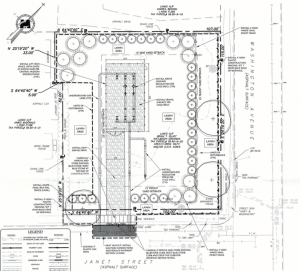
Item #3: #245 Washington Avenue SPECIAL PERMIT to install a gas regulating station. SBL 56.90-6-20. SEQR Determination. Zone R-1. Ward 3. Central Hudson Gas & Electric; Applicant/owner

Recently, a citizen of the City of Kingston who lives near a new proposed Gas Regulating System to be located at 245 Washington Avenue by Central Hudson contacted us with some concerns.  Gas and Electric Magnetic Field (EMF) Substations are a part of our landscape in Kingston, given the need for gas and electric in our daily lives.

But process is key, and it was the process that peeked our interest.

Read more…