What If We Stopped Treating Food Waste Like Garbage? A conversation with Shabazz Jackson

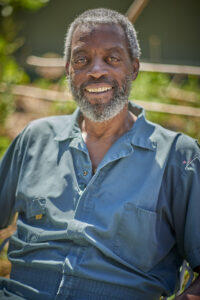
Photo credit: Michael Isabell

By Rebecca Martin

There is something magical about watching food waste become soil.

I would know, because I’ve been doing it in my own backyard this summer—with a little help from Shabazz Jackson and Josephine Papagni of Greenway Environmental Services.

One principle Shabazz and Josephine shared with me: waste should be managed as close to where it is generated as possible. And what could be closer than our own backyards?

In just a couple of months, I’ve been turning about 20 pounds a week of household organic material into compost—all in my little Earth Machine composter that they provided for me. At that rate, my backyard will process more than 1,000 pounds, or roughly half a ton, of organic material in a year.

Think about that. Half a ton of material getting a second life right here at home—not hauled away, buried or burned, but turned into healthy soil that helps create beautiful gardens.

And I’m not just breaking down vegetable scraps and other organics, but meat and oils, too—something I never thought would be possible in my little home composting system. No maggots. No flies. Just red wigglers. My compost has become such a rich, healthy ecosystem that the jumping worms can’t tolerate it. 

And my backyard isn’t unusual. Roughly two-thirds of Ulster County’s housing units are single-family, detached homes—that’s tens of thousands of households with outdoor space. If more of those households composted even 20 pounds of food waste a week, as I do, we could keep thousands of tons of organic material out of the waste stream every year. 
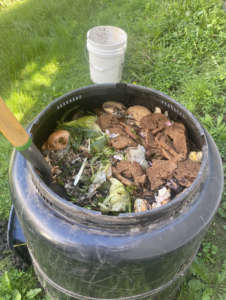
I remove at least 20lbs of organics from my kitchen every week.

In Kingston, the backyard composter doesn’t have to stand alone. The City’s community composting program gives residents a way to keep the practice going year-round—when backyard composters freeze in the winter, residents can bring their food waste to the community system instead.

That’s the power of thinking about organic waste differently. We don’t need one giant solution—we need a network of local solutions working together: backyards, community composting programs and transfer stations. And Greenway has figured out how to make one of the smallest pieces of that system—the backyard composter—remarkably efficient.

That’s what makes Greenway’s invention so exciting. They’ve taken the natural process of decomposition and figured out how to make it work quickly and cleanly in an urban backyard—even with meat and oils. What once seemed like “waste” can become a resource right where it is generated. And that’s something I want everyone who reads KingstonCitizens.org to know: you can do this, too.

###


Who are you, and how long have you been doing this work?

Shabazz Jackson: Greenway Environmental Services is a regional organics recovery and soil company. We collect and process food scraps, leaves, brush, logs, pallets, and other organic materials and transform them into compost, mulch, topsoil, and specialty soil blends rather than sending them to the landfill. Our philosophy is to recover the organic fraction of the waste stream and return that fertility to the soil, while helping protect groundwater and surface water. We also design zero-waste systems and work with colleges, municipalities, businesses, and other institutions to develop and manage food-waste programs.  We’ve been doing this work for more than 50 years. I’m an inventor, but what we invent are natural systems. The challenge is to take a process that nature designed to happen slowly and redesign it so that it works efficiently in an urban environment. We’re essentially learning from nature and figuring out how to make those systems work at the scale and speed that our communities need.

How do you do that?

SJ:  In nature, organic material breaks down slowly and feeds small organisms that depend on it. That’s a good system for a forest, but in a city or neighborhood, we don’t want food waste sitting around, attracting maggots and flies and creating odors. We work with nature, not against it—to take the biological process nature designed and adapt it to the way we live. And we’ve succeeded at doing that.

What exactly have you invented?

SJ: The key is to engage during the decomposition process. We’re imitating the human digestion system. It’s a form of biomimicry. We give it the right biology and the right environment to decompose efficiently from the start.

We start with a rapid decomposition medium that goes into the Earth Machine, like the one you have, along with the food waste. We make it by mixing actively decomposing food-waste compost with wood chips from the local tree-service industry. When a tree is removed, the tree service grinds it into chips, and we use some of those locally sourced chips in our medium.

The medium introduces an active biological process right from the beginning. Instead of letting food waste sit around and begin to rot, we’re creating the conditions for it to break down quickly and aerobically. That’s the key.
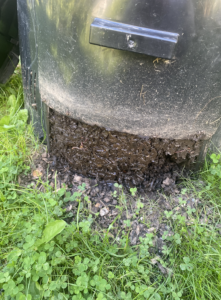
The “medium” at the bottom of my composter is now what I use to place on top of my weekly collection. It’s rich with red wigglers.

The second component is our odor-control blend, which is what you call the “lasagna.” Every time you add food waste to your kitchen container, you simply sprinkle a handful of the blend over it. It’s a biological filter that absorbs the sulfur generated when food rots.  The odor control blend is a mix of completely cured and finely screened food waste compost and wood shavings which is effective in controlling moisture.  At present, we are field testing the materials in preparation for household distribution.  It’s available in bulk at our community composters in New Paltz and Poughkeepsie.  We make the blend at our facility using clean wood shavings collected from a modern wood shop. The shavings are a clean byproduct of that process. We mix the kiln-dried wood shavings with fully decomposed and cured food-waste compost that has been finely screened. The blend inoculates the food with the bacteria needed right at the beginning of the process. That’s what makes it work.

So the goal at the start is to stop food from rotting?

SJ: Yes. The goal is to help it decompose in the right way from the start when it matters. 

Why is the beginning of the process so important?

SJ: Because that’s where you establish the biological environment. We’ve inherited a culture that treats food as garbage as soon as we’re finished with it. Think about what happens in a typical household. Once a week, you take out a load of rotting food. Maybe you’ve separated it from the rest of your garbage and put it in a container provided by the municipality. But you’re still carrying over the culture of disposal. And the problem is that rotting food is inherently difficult to manage that way. It’s wet. It attracts flies and maggots. It smells. We’re trying to make a cultural transition—a cultural upgrade. At the base of that transition is the idea that we should stop having rotting food sitting around our kitchens. Instead, we need to separate this material and give it the biological conditions it needs from the very beginning.
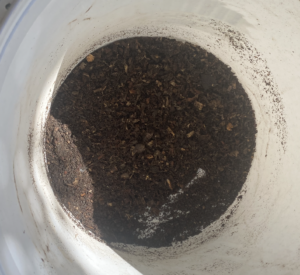
Greenway’s “Odor Control Blend” is the magic sauce! I get 2-3 buckets a month that keeps me in the clear.

And some of the materials you’re using are themselves made from waste?

SJ:  Yes. That’s one of the reasons we can keep the cost so low. We’ve figured out how to take commercial waste and turn it into a resource.

How do you work with local businesses while keeping their food waste as close to its source as possible?

SJ: We want to encourage food waste to go to the closest appropriate local facility. For example, we have a contract with Adams Fairacre Farms, and we also work with the Culinary Institute of America. Both generate food waste locally. Adams has a store in Kingston, and the CIA is in Hyde Park, close to UCRRA. So, in keeping with our principle of managing waste as close to its source as possible, it doesn’t make sense to haul that material all the way to New Paltz when UCRRA is right there. We send their food waste to UCRRA.

So you don’t believe that everything needs to go to one centralized facility?

SJ:  No. There is no one-size-fits-all solution for removing organics from the waste stream. We need to start thinking differently. We’re looking at each waste stream and asking what makes the most sense locally.

How does compost connect to food systems?

SJ: In nature, soil and food are part of the same cycle. Plants take nutrients from the soil, and organic material eventually returns those nutrients to the soil. If we’re designing a sustainable food system, we should be doing the same thing. The composter and the garden shouldn’t be separate—they should be part of one system. You might bring in materials at the beginning to establish a garden. That’s a one-time contribution of material we’ve recovered from commercial sources. After that, the food waste generated in the surrounding community can be broken down and returned to the soil, helping maintain the fertility of the garden. The food feeds the soil, and the soil helps grow more food. That’s how nature works.
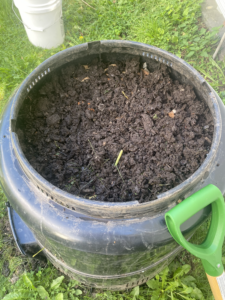
After breaking up my food scraps, I add about a 1/2 inch of medium from the bottom of my composter

Haven’t we already built a decentralized waste system?

SJ: In many ways, we have. Ulster County’s goal is to recover 90 percent of the waste stream by 2050. And the county has already invested in a decentralized system to help get there. UCRRA is the hub, and the 19 transfer stations are the spokes. That’s a significant investment in infrastructure that is already spread throughout the county. So I don’t think the question is whether we should have a decentralized system. We’ve already made that choice. Now we need to develop it. The question is: How do we use the system we’ve already built to recover 90 percent of our waste? That means looking at what each transfer station can do, how we can remove organics from the waste stream, and how we can connect the different pieces.

What does this have to do with the future of Ulster County’s waste system?

SJ: Everything. I think we need to stop pursuing projects like Global NRG and decide what kind of system we actually want to build. There is only one pool of money. UCRRA already has access to roughly $60 million in bonding—enough to invest significantly in a more decentralized system. I’m currently serving on the UCRRA Zero Waste Committee, and I think our first job should be to decide is if we want a centralized system, or do we want to develop the decentralized system we already have?

Why is removing organics from the waste stream so important?

SJ: Because you can’t get to zero waste without removing organics from the waste stream. Food waste is one of the largest parts of what we’re throwing away, and it doesn’t belong in a landfill or an incinerator. It belongs back in the biological cycle. There isn’t one solution that will work everywhere. We need to look at what we’re generating, where we’re generating it, and what infrastructure we already have. And we have to pay attention to our largest industries.

Tourism is a major part of Ulster County’s economy, and tourism generates a tremendous amount of food waste. We can’t seriously talk about zero waste without figuring out how to keep that material out of the disposal stream.

New Paltz gives us an opportunity to demonstrate what this could look like. The Village has a significant tourism economy and a concentration of restaurants and other food-related businesses generating commercial food waste. The Town already has infrastructure at its transfer station. Why not put those pieces together and make New Paltz a model?

The transfer station could take the food waste generated by the Village’s tourism economy, and we could measure what happens when we actually capture that material—how much is diverted, how clean the stream is, what it costs, and how much compost and soil we can produce from it. That would give us a real-world demonstration that could be replicated in other communities across Ulster County.
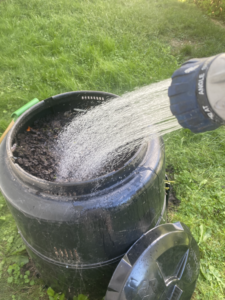
I always water my compost after adding to it, so that it’s damp (not wet). Moisture is required to break organic material down efficiently.

What do you think Greenway’s role is in this transition?

SJ: Greenway has the solution. Our society has the problem. We’ve been preparing for the day when people finally say, “Okay, Shabazz. We’ve heard enough.” When that day comes, we’re ready. In fact, we’re ready now.

Our role was to invent natural systems and figure out how to make them work in the places where people live. Nature has already designed a system for breaking down organic material. Flies, mealworms, bacteria and other organisms do that work naturally. But when we live in an urban environment, we need to manage that same material differently. Our challenge is to create the conditions for it to break down without the flies and the odor.

And that’s where people come in. Maybe you have a small piece of property. Maybe you’ve invested thousands of dollars and countless hours into your backyard garden. You’re already investing in the food you’re growing. Why not take the organic material you’re already generating and turn it back into the soil that makes your garden more productive?

That’s what Greenway is here to do: take what nature designed, adapt it to our urban environment, and use it to meet people’s needs.  We don’t need to start from scratch. We need to connect the pieces we already have—and build a system that keeps organic material close to where it is generated, puts it back into the soil, and move Ulster County toward its goal of recovering 90 percent of its waste by 2050.

If you’re interested in Greenway’s backyard composting program and other services, contact Shabazz and Josephine at: gr*********@*ol.com
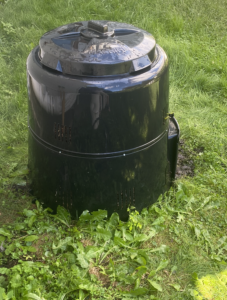
 

Voila! It’s ready to work its magic.


Kingston YMCA Farm Project Host Fundraiser on May 18th at 8:00pm.

corngirls

 The first fundraiser for the Kingston YMCA Farm Project is planned.  The event will take place on Saturday, May 18th at 8:00pm at the Shirt Factory located at 77 Cornell Street in Kingston. 
 
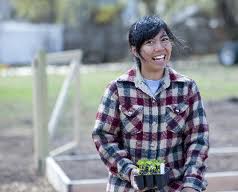
Kingston, NY –  A new farm project is underway at Kingston’s YMCA located off of Susan Street in Kingston.  Their mission is to educate and empower young people by directly engaging them in sustainable food production on an “urban farm”. Youth will learn and practice the skills needed to produce their own food and to make healthy choices throughout their lifetime, while increasing the community’s access to fresh produce.
 
Led by first generation organic farmer Kaycee Wimbish who is also managing the South Pine Street City Farm in 2013 in Midtown Kingston, the location already hosts 33 community garden plots and a greenhouse on almost 1 acre of land. 
 
The groups first fundraiser party will take place on Saturday, May 18th at 8:00pm located at the Shirt Factory,  77 Cornell Street in Kingston. There will be live music provided by Pocatello and the Rosendale Brass band. DJ Liz will also provide music, and Keegan Ales will provide the beer. A suggested donation of $10 – $20 will be collected, but noone will be turned away. The group encourages all supporters to give what they can. 
 
If you can’t attend but wish to give a donation, you can do so by following this LINK.


For more information, contact KayCee Wimish at: ka************@***il.com  or call  845/332-2927

###


About the Kingston YMCA Farm Project:  This fall we will break ground on a quarter acre farm in Midtown Kingston.  The farm will be a place of education and community food production. The Farm Project will engage young people in the magical process of growing food. With planned integration into the YMCA’s on-site afterschool and summer camp programming, the farm will train 200 young farmers each season. Children will be involved in all aspects of food production and garden care: seeding, transplanting, watering, weeding, harvesting, and ultimately preparing and enjoying the harvest. YMCA Farm Project participants will know exactly where their food comes from, how it grows, and the energy and effort it takes to arrive on a plate. Children participating in this program and the wider community will gain access to fresh, healthy, chemical-free food as the result of the YMCA Farm Project.


An Ode to Farmer Jesica Clark.

Unknown
Photo by Dion Ogust

Over the past seven years, I have had the opportunity to meet and work with some amazing people. But none as dear and few as great as Farmer Jesica Clark.

I met her years ago, when she approached me to help as a consultant to the Kingston City Hall Victory Garden back in 2007, a project that was a 10×10 foot raised bed organic garden on City Hall grounds –  pretty unprecedented  – with the support of then Mayor Jim Sottile and former city clerk Kathy Janeczek who sadly passed in 2009.

Jesica was a young first generation farmer , who was working as the head farmer of Phillies Bridge Farm Project in Gardiner, NY – and I was so pleased to have her support and to pick her brain on how to make this project successful then. Allyson Levy of Stone Ridge also volunteered at that time, who has since become  a master gardener through the Cornell Cooperative Extension program and is co-owner of Hortus Conclusus. With such help, I couldn’t go wrong.

When I took post at the Kingston Land Trust as Executive Director back in 2010, Jesica got in touch with me again – as she was moving to Kingston and was looking for land to farm hoping for 10 acres. All I had then to offer was a small 1/4 acre parcel in the midtown area thanks to Binnewater Ice who had donated the land and a partnership with the wonderful Diane Reeder and the Queens Galley.

The space came with a free water source,  and I convinced her that creating a ‘farm’ on a small parcel could help Kingston to learn the benefits of urban farming.

She ran with it and moved away from her desired farm space and within a few weeks, Jesica had a three year business plan and a fundraising platform on Kickstarter. Very soon after, we negotiated a lease, a sublease – and she raised almost $6,000.00 to make the ‘farm’ concept a reality. The South Pine Street City Farm was born.

…and it was completely Jesica’s invention.  A space that grew over 150 varieties of vegetables with an educational component. In addition, she took on the task of developing ‘The Dig Kids – an Urban Farm Program” with me that in the past two years has successfully worked to transform the Everette Hodge Center garden and new garden plots at the Van Buren Street playground that not only educated each of us, but also dozens of children and their families in farming practices with the invaluable help of Megan Weiss of Kingston Cares who is someone else I hold in the highest esteem.  She started a farm stand (that Hugh Cummings built for free) selling her beautiful produce to the community three days a week at the farm, got involved with the Kingston’s Farmers market’s in uptown and midtown – and also developed a farm to table program providing vegetables to local businesses all over Kingston.

Jesica is one of the most hardworking people I know. But on top of it all, she has a deep understanding of how things work and is a savvy business woman. What’s more is her ‘can-do’ attitude that makes the impossible possible, with a personality that all of us have simply fallen in love with.

But her vision in being completely sustainable through farming a larger parcel is her dream – and she found such a space across the river. Although I am very happy for her, it is also with great sadness for me to see her leave Kingston.  She and her husband Daniel Clark (of Prime Print Shop in Poughkeepsie, who has also been essential and generous to our efforts) are the kind of residents that you  lose with a heavy heart.

Jesica Clark has put Kingston on the map on the Urban Agriculture front – something that is critical for us in this current climate. She has helped to remind us all something that our grandparents knew but has been lost in only two generations. We must grow our own food, help one another and do so with grace, beauty – and simplicity.

Her additional gift to our city is that she attracted another first generation farmer to Kingston – Kaycee Wimbish and her family – who will take over the South Pine Street City Farm, the Dig Kids Program and work towards a new and larger farm at the YMCA.  Because of Jesica, we will continue to pursue urban agriculture to benefit our community and continue to be a model for other Hudson River cities.

Thank you, Jesica.  For all of your hard work and in helping to make us more healthy and thoughtful citizens.

Rebecca Martin

Hudson Valley Seed Library “Pack Art 2011” Featured at KMOCA in Kingston

The Hudson Valley Seed Library is one of my favorite local businesses in the region – and they are about to show their new ‘pack art 2011’ at KMOCA in Kingston.

Hope you can make it –

Rebecca Martin

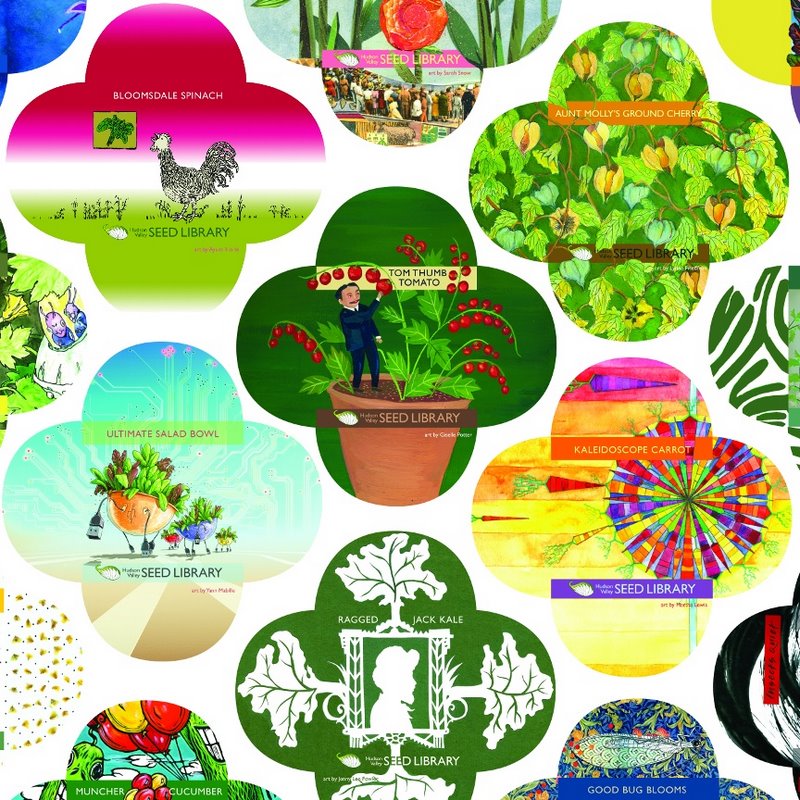
The Hudson Valley Seed Library strives to do two things – to create an accessible and affordable source of regionally-adapted seeds that is maintained by a community of caring farmers and gardeners; and, to create gift-quality seed packs featuring works designed by New York artists in order to celebrate the beauty of heirloom gardening.

In 2011, we expect to offer over 60 varieties of locally grown seed and around 100 varieties sourced from responsible seed houses. Most of our varieties are rooted in the history and soils of New York or are chosen because they do well here. Every year we plan on growing additional varieties on the Seed Library farm and contracting with organic and certified naturally grown farmers in the Hudson Valley and upstate New York to grow even more varieties.  By 2014, we aim to be 100% New York grown, though certain tricky biennials may be holdouts for a few years beyond.

At KMOCA (Kingston Museum of Contemporary  Arts), they will present “Pack Art 2011” – Original art from the Hudson Valley Seed Library.

Opening reception:
Saturday, November 6, 5-7pm.

Dreaming is an essential part of gardening in the Northeast. Throughout the winter, our dreams will hold the flavors, fragrances and beauties of the greener seasons. And the Hudson Valley Seed Library is here to help keep those dreams alive until springtime with “Pack Art 2011” at the Kingston Museum of Contemporary Arts.

“Pack Art 2011” is a an exhibit of original works commissioned by the Seed Library, which is known almost as well for their artistic seed packs as the seeds themselves. This year’s artists come from all over the Hudson Valley and New York City. Each artist interpreted one variety of herb, flower, or vegetable from the Seed Library’s catalog. Mediums include collage, encaustics, oil, watercolor, digital imagery, paper cutting, and ink. The diversity of the artworks reflects the wide variety of genetic wonders they represent.

16 different artists present works depicting such summer delights as Kaleidoscope Carrots, Velvet Queen Sunflowers, Ragged Jack Kale, State Fair Zinnias, and many more. This show marks the first time the Seed Library will be making available signed, limited edition prints of the original works in the show. Art Packs filled with seeds and framed seed packs will also be available.

“Pack Art 2011” continues at KMOCA through November 27th.

Hours: Saturdays, 12 to 4pm, or by appointment.

Kingston Museum of Contemporary Arts
103 Abeel Street, Kingston.

A Farm Grows in Kingston

By Rebecca Martin

Kingston Land Trust partners Diane Reeder (The Queens Galley) and Diane Davenport (Binnewater Ice)  approved the mission and business plan for turning the South Pine Street Garden into a ‘Farm’ under the stewardship of Farmer Jesica Clark.

Community outreach and a press release will be available in the coming months. In the meantime, Jesica will begin preparing the plot in it’s entirety to include erecting a fence, doing soil tests, bringing in compost and other augmentation and trimming/removing trees in preparation for planting in 2011.

A working mission, partnerships and collaboration and bio of Farmer Clark is below. The garden name will change to reflect the farm’s mission.

If you wish to make an early donation towards this project, you can do so through the Kingston Land Trust.


Those who worked to farm this location during the 2010 season should be directed to Jesica while she is devising a new system for the space. If anyone is interested in working with Jesica this fall please email her directly as well.   je***********@***il.com

If you have any additional technical questions at this time, please feel free to contact the Kingston Land Trust  at re*****@***************st.org or call their office:  845/877-5263.

This is exceptional news for the garden movement in the City of Kingston.

Mission

The South Pine Street Garden will serve as a model of urban agriculture for the city of Kingston and beyond.  A small scale market garden will show that agriculture can thrive in an urban environment and the site will be a place of learning as well as teaching for community organizations, businesses and schools.

Partnerships, Collaboration, Community

The garden and its growers will work in partnership with individuals and organizations in the community to achieve a garden and food based network.   Partnerships include: Binnewater Ice Company, The Queen’s Galley and the Operation Frontline Program, the community (*) and the Kingston Land Trust.

In particular, an extraordinary partnership between the garden and the upcoming restaurant “Rosemary” is planned wherein the garden would provide featured produce to this high profile, innovative Kingston restaurant and the garden would also serve as a learning space for the restaurant staff.

(*)  We will encourage members of the community to participate in the garden through volunteerism, workshops and organized garden “work and play” parties.

Farmer Jesica Clark Bio

Jesica Clark has worked in farming and small scale agriculture for eight years.  She has organized community gardens, managed a small diversified farm in the Hudson Valley and worked for several for-profit as well as not-for-profit, educational farms.  Having grown up in New York City and apprenticed in central Pennsylvania, she has experience in both urban culture and rural living. She is comfortable working with all members of a community and feels that good food is integral not only to physical health but also to social health.

Free Mulch From the City of Kingston

Mulch and other garden augmentations are a multi-million dollar business, so I’ve often wondered with the city of Kingston’s yard waste problems why it didn’t process and sell it back to the county for profit. I suppose one day, it may decide to do so. In the meantime, get all the mulch you need….for free.

The Dept. of Public Works will be offering City residents free mulch at the transfer station on the blvd., effective immediately.  It has been approx. 3 months since our brush pile was mulched and we have been turning it over, so it is now ready to be given away.  We will require residents to load their own barrels, pickups etc.    

We can load vehicles w/the appropriate cab covers such as small dump trucks provided that people contact the transfer station in advance. 

A banner is going on the B’way overpass to notify residents of the availability.    

Please advise people of this availability and suggest to them that they contact the transfer station prior to pick up, at 331-5787.

Kingston’s Role in a Global Movement

One of the sessions last night. Photo by Norman Stockwell of WORT radio.

By Arthur Zaczkiewicz

The convergence of activists working for human rights, health care reform, climate change, and social justice, among others is happening right now in Detroit, Mich. Over 20,000 people have flocked to the Motor City this week for the US Social Forum to exchange ideas, participate in people’s movement assemblies (PMAs) and attend (and present) 1,000s of workshops with topics ranging from grassroots networking to change immigration law to learning how to mobilize citizens for better access to public funds.

Read more…

South Pine Street Garden Makes First Food Donation to Queens Galley

Farmer Frank and Rebecca Martin making a delivery of turnip greens to the Queens Galley from the South Pine Street Garden. Photo credit: Kevin McEvoy

The South Pine Street Childrens/Community Garden off of Greenkill Avenue in Ward 5 made a large food donation of Turnip Greens to Queens Galley.

Read more…

Garden Volunteers: We Need You

By Arthur Zaczkiewicz

Earlier this month I attended a conference in North Carolina relating to the national effort behind the local “Healthy Kingston for Kids” project, which aims to reverse childhood obesity through environmental and policy change. It was a “mind-opening” experience to meet others working on the same issues from places such as Buffalo, Oakland and Chicago.

Read more…

Be a Part of a Garden Democracy In Kingston.

A Garden Democracy. Now that's a concept I can totally get behind.

As most of you can imagine, when I received this press release I was more than pleased.  With gardens now at Kingston City Hall, most of our schools and a growing number of community gardens, this is a natural next step.

You’ll find the text in both English and Spanish below.

See you there.

Read more…

Free Showing of the Film “Food, Inc” at UPAC Tomorrow Night (4/30)

Years ago, I had the privilege to work for Ev Mann of the Center for Creative Education. At that time, their headquarters were in Stone Ridge, NY.  Coming up from New York City as a musician with a background in Production Management, it was my good fortune to have seen their ad for someone like me to assist the Administrative Director, Mary Farel.

Those couple of years were two of the most fulfilling in my professional life.

Although Ev has had close ties working with the children and schools in the city of Kingston, he moved his operation from Stone Ridge into Midtown back in 2005/2006 where he continues to bring music, culture, dance and drums to the youth and families in our area.

On Friday night (4/30) The Center for Creative Education in partnership with Active Voice and Participant Media bring a FREE screening of the ever important film FOOD INC to UPAC in the city of Kingston.  Click on this LINK to see the flyer for this event.

On the ground, we are witnessing alarming numbers in childhood obesity – yet at the same time, 1 in 8 children will go hungry each and every day.

It’s critical that as a community, we work to change our daily habits. In Kingston, every one of our schools (and I believe there are 14) will have some form of garden in them. That’s a huge accomplishment that has taken place in just two years time.

Gardens are the buzz word in Kingston. Let’s continue to nurture them and encourage our children to get growing at home and at school.  Take your family and visit a local farm, and pick something fresh off the vine to taste.

There is nothing quite like it.

– Rebecca Martin


SchoolgardenreourcesinNYC

Kingston Natural Foods

Hudson Valley Seed Library

CSA’s in the Hudson Valley: From Chronogram Magazine

Square Foot Gardening Presentation at the Kingston City Hall Garden TODAY (4/17)

Kingston High School student successfully plants the Kingston City Hall garden last season (2009)

Today at 1:00pm (4/17)  there is a square foot gardening presentation at the Kingston City Hall garden located on the Northwest side of the building.  Jesica Pascual who was once a farmer at Phillies Bridge Farm will lead the way. Though wet, it’s a really nice day to be out in the garden. I know because I just came in from mine.

You can read the press release by visiting the Kingston Victory Garden Yahoo! Group (and if you are a local home gardener you might wish to become a member of the group as well). We will also cut and paste it below.

– Rebecca

Learn Square Foot Gardening During Free Workshop at City Hall Garden

Jesica Pascual, volunteer garden manager of the City Hall Victory Garden, will lead a free workshop to on square foot gardening this Saturday, April 17 from 1 p.m. to 2:30 p.m. The garden is located on the west side of City Hall, which is located on Broadway across from the Kingston High School.

The workshop is designed for anyone looking to learn square foot, or French intensive gardening, which allows gardeners to grow the maximum amount of vegetables in the minimum amount of space and is perfect for backyard (or front yard!) gardens. Square foot gardening is the method being used this year at the City Hall site as a way to encourage residents to grow their own food.

“Using this method, it is also easy to incorporate beautiful flowers and landscaping elements such as trellising and decorative borders,” Pascual said adding that she will cover the basics in setting up a garden plot, planning out the space and where to get high-quality ingredients for soil as well as seeds and transplants.

At the end of the workshop there will be a short swap and share session where fellow gardeners can swap seeds and share resources – so please bring your extra or leftover seeds.

For more information, contact the Kingston Land Trust at Ki***************@***oo.com.

Upgrading the YMCA Playground by Making Community and Children’s Gardens

This just in! I am so happy to learn of the news, as that play area is really beautiful and completely underutilized.

Good news indeed.

– Rebecca Martin

FOR IMMEDIATE RELEASE

April 6, 2010

Citizen Help Sought for YMCA Park Clean up and Garden Projects

DEP volunteers launch initiative at YMCA playground that includes creating community and childrens gardens.

Employees from the New York City Department of Environmental Protection office in Kingston have volunteered to clean up the YMCA playground as well as install a community garden and children’s garden at the site, which is behind the YMCA building on Broadway in Midtown. The coordinators are conducting the first cleanup this Saturday, April 10 from 9 a.m. to 1 p.m. and need community volunteers to help.

The work involves making repairs to the jungle gym as needed, cleaning up trash at Summer and Susan streets, and removing brush, dead limbs and trees as well as removing invasive plants. Additional cleanups are also planned in the coming weeks.

For more information about the clean up as well as to help out with the garden project, contact Ed Blouin at eb*****@****rr.com or by calling him at (845) 616-2677.

For more information about other community garden projects in Kingston, contact Arthur Zaczkiewicz of the Kingston Land Trust at za*********@***oo.com.